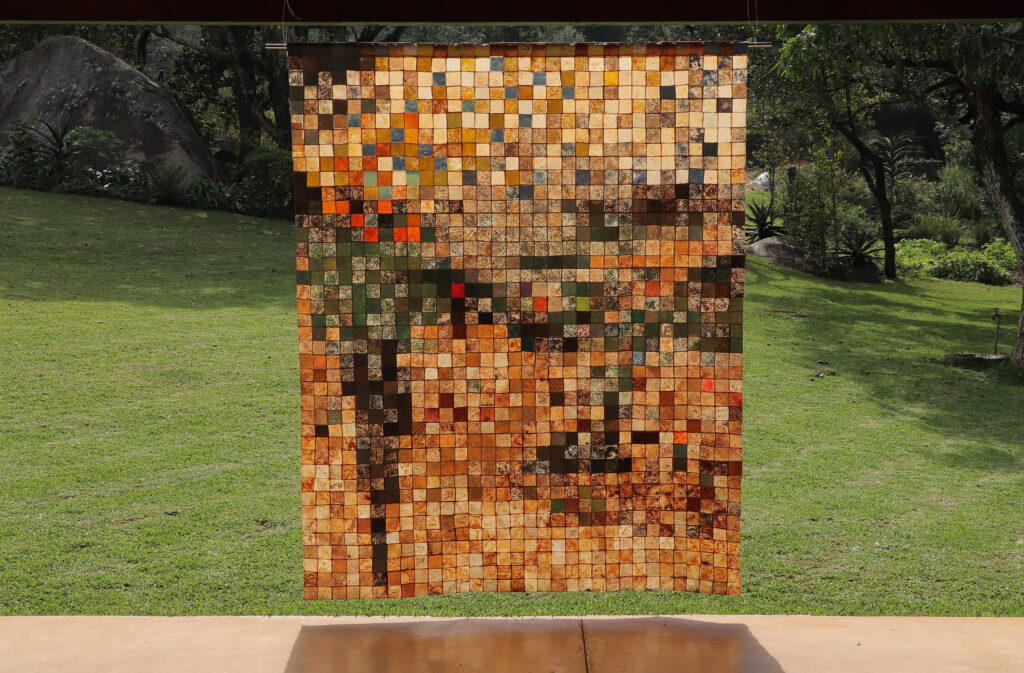
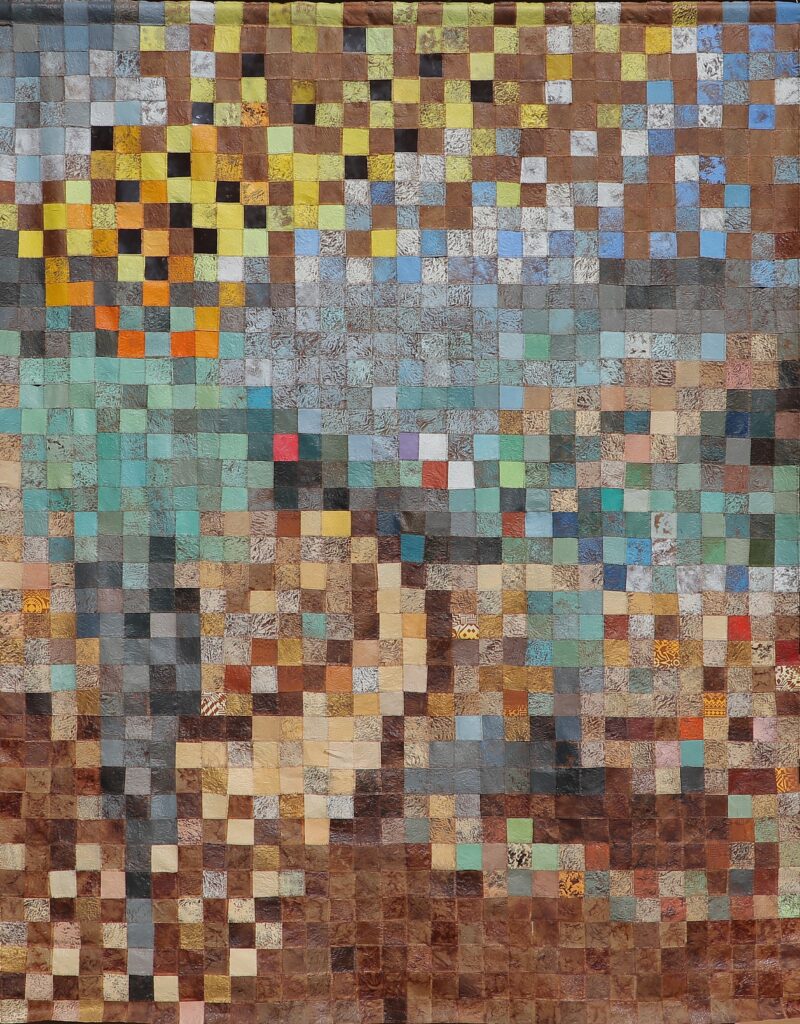
June: Inhlaba: Be Still
Frontlit
Oil on teabags
180 x 200 cm
2022-2025
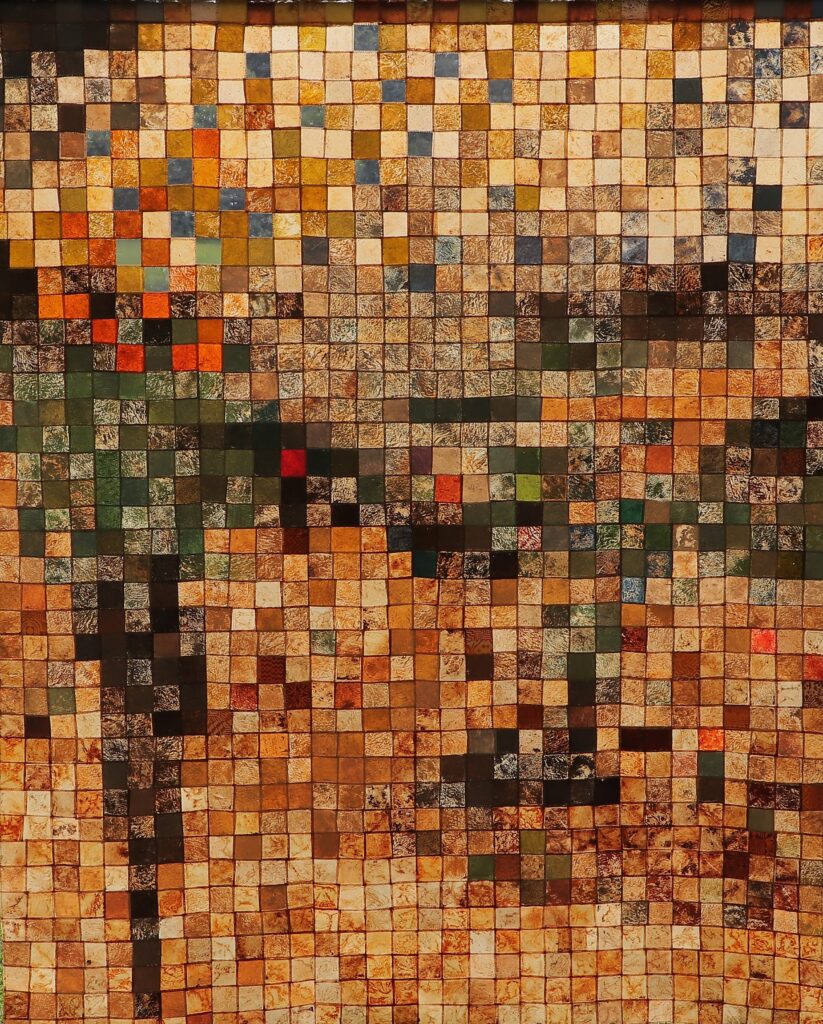
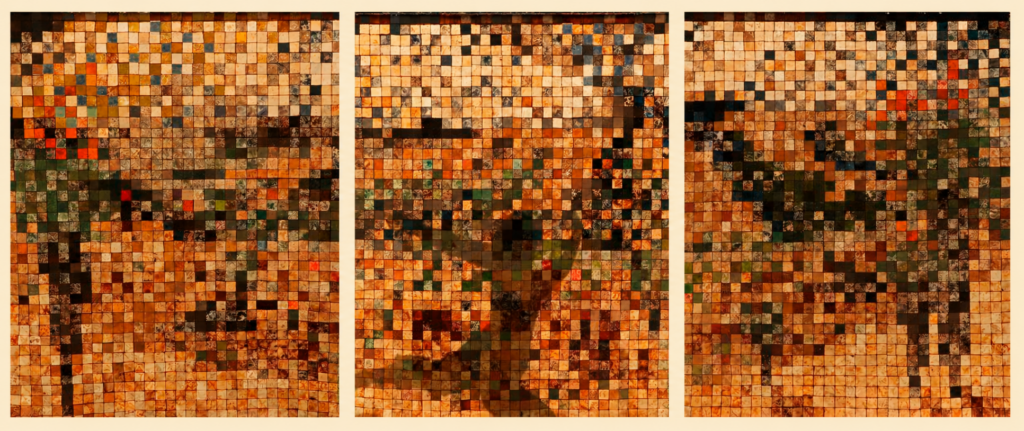
June: Inhlaba: Be Still
Backlit
Oil on teabags
180 x 200 cm
2022-2025
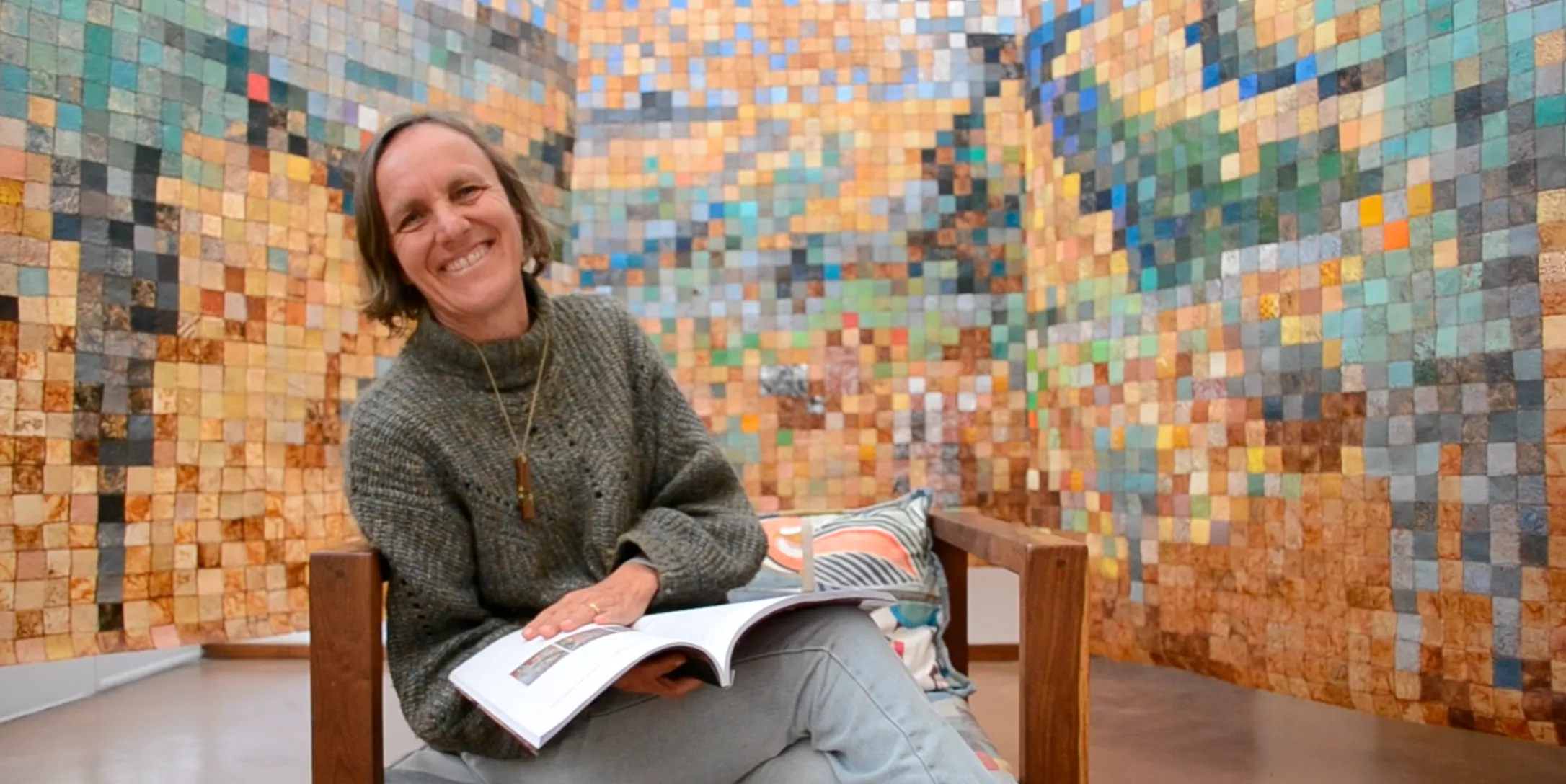
In the middle of the year, after much emotion and turmoil, I take a deep breath on my rock overlooking Nyonyane and remind myself: be still.
It’s a time to reground myself and keep going.
In The Atlas of Emotion, Giuliana Bruno (2018) explores the concept of the haptic as it relates to the body. She posits a theory that connects sense to place. The haptic, constituting the reciprocal function between us and the environment, also relates to kinesthesis, the ability of our bodies to sense movement in space.
The Latin root of the word emotion is a compound of movere, to move, and e, out — emotions are historically associated with movement through space.
I find that idea deeply resonant when I think about the winter triptych, and about June in particular. A quilt about being still. Yet a quilt all about the cyclical nature of the seasons, of moving through my internal and external landscape.
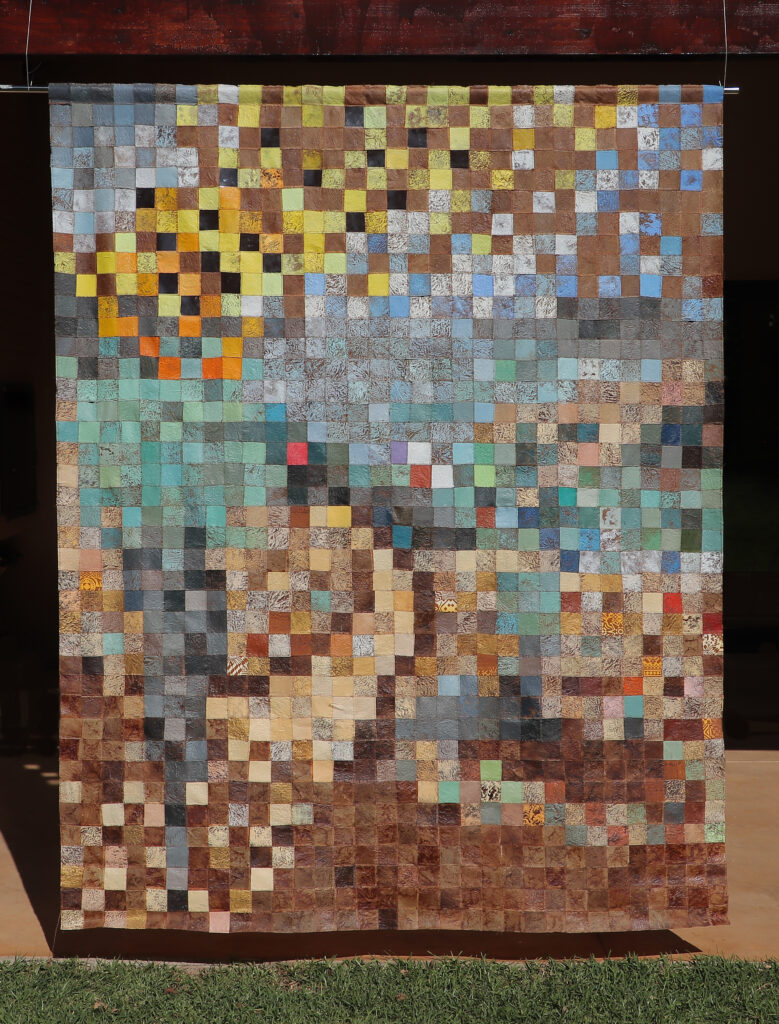
June: Inhlaba
Aloes are in flower during this time.
Winter in Eswatini is my favourite time of the year; the golden grass swaying in the breeze, the aloes and succulents exploding into flames of reds, oranges and yellows. These are the landscapes that feed my soul and have inspired much of my art-making practice.
The three winter quilts were laid out together on my lounge floor before I could hang them — over four thousand teabags in all, spread across the room, becoming Nyonyane in miniature (although not too miniature!).
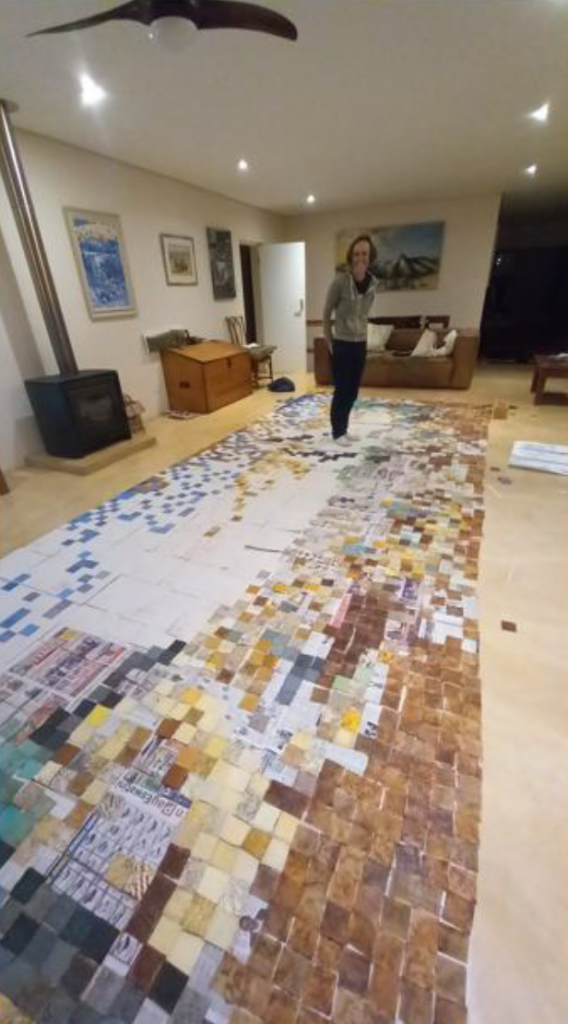
There is something about seeing a landscape reassembled from spent teabags that I never stop finding strange and right. Each one a small thing, used and dried and set aside. Together, a mountain.