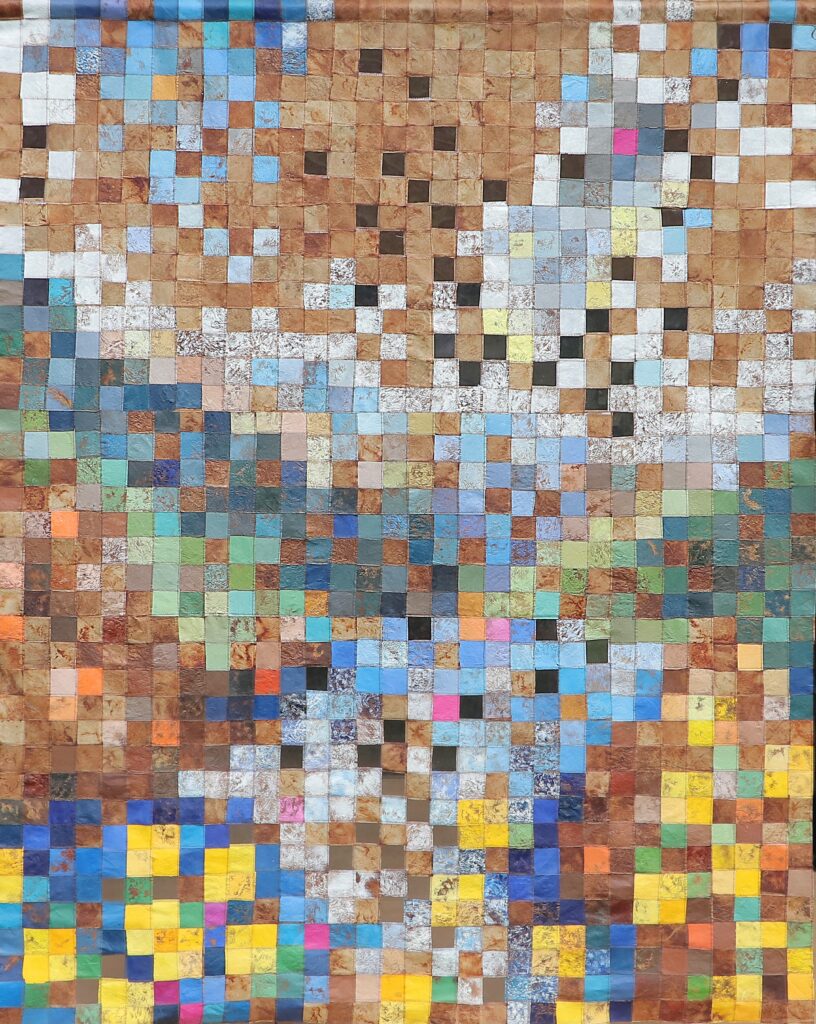
May: Inkhwekhweti: Malolotja
Frontlit
Oil on teabags
180 x 200 cm
2022-2025
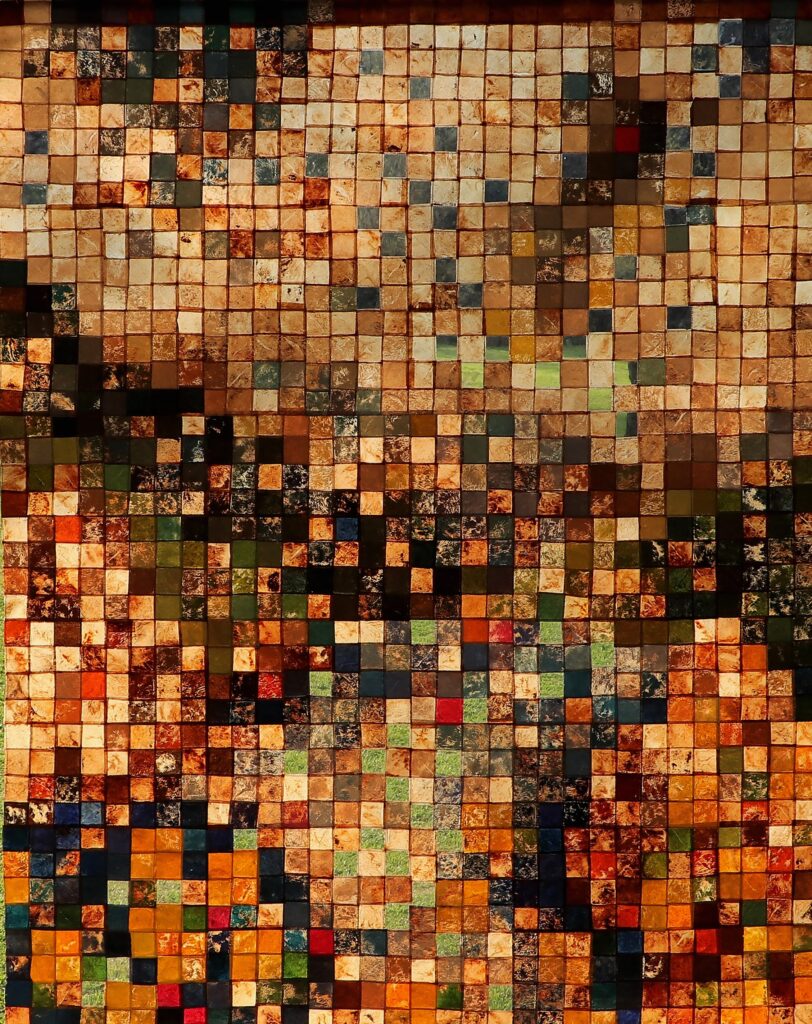
May: Inkhwekhweti: Malolotja
Backlit
Oil on teabags
180 x 200 cm
2022-2025
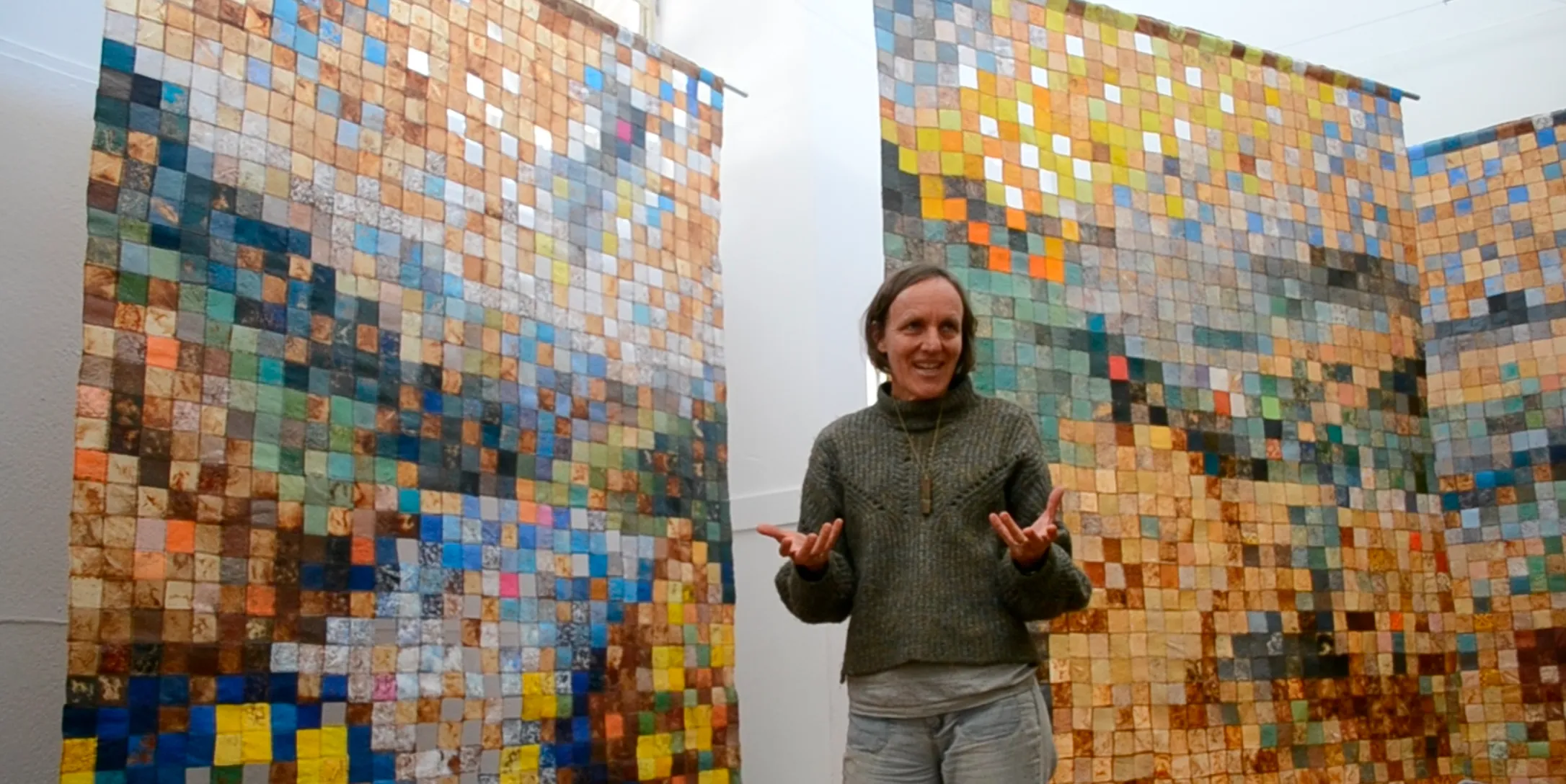
May: Inkhwekhweti: Malolotja was the first of the twelve art quilts I made. In it, I recall the time when we were moving from Namibia to Zambia. While passing through Eswatini en route north, I looked over Malolotja Game Reserve towards the highest peak in Eswatini, Emlembe, and thought ‘I could live here’, not knowing that I would indeed be living in Bulembu, a town directly below Emlembe, just six months later.
Unbeknownst to me then, I was looking at my new home. In retrospect, I am profoundly touched by the thought that I was moving through a space, on my way to a new perceived destination, whilst, in fact, I was close to the place I would reach after a 23,000 km, roundabout trip, through Namibia, Botswana, Zambia, Tanzania, Malawi, Mozambique and back to Eswatini, finally ending in Bulembu.
May: Inkhwekhweti
This is the lean month leading to winter, where the pickings are meagre and a little food is gleaned from the field.
The quilt depicts a view from the rim-flow pool at Malolotja Nature Reserve — a vast, luminous vista looking out towards Emlembe. It is one of the most beautiful views I know.
The mountains here are ancient beyond comprehension: part of the Barberton Greenstone Belt, more than 3.5 billion years old, risen slowly from the seabed over geological time, layered with the traces of the oldest single-celled organisms on earth. To stand at that pool and look out is to look at deep time made visible. It puts a great deal into perspective.
Most of what I worry about belonging to — communities, countries, identities — is barely a flicker in the life of those mountains.
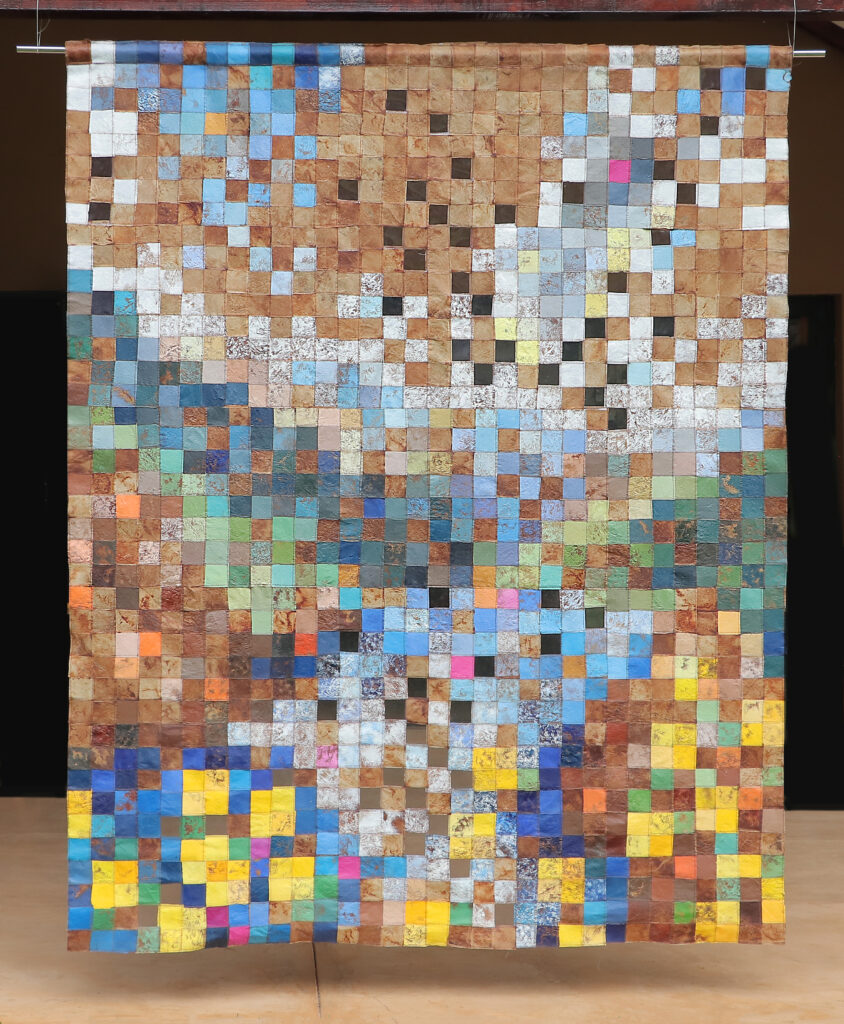
I had seen it before I knew what I was seeing.
We were moving from Namibia to Zambia — passing through Eswatini on the way north, 23,000 kilometres of southern African road stretching ahead of us through Botswana, Zambia, Tanzania, Malawi, Mozambique, and eventually back again. I looked out over Malolotja towards Emlembe and thought, without quite knowing why: I could live here. Six months later, I was living in Bulembu, a town situated directly below that same peak. We had taken the long way around to arrive at the place I had already, without knowing it, recognised as home.
In retrospect, I am profoundly moved by that moment — standing at a viewpoint on the way somewhere else, looking at my future without knowing it was mine. The quilt holds that ambiguity. It is both an exquisite physical landscape and an inner one: colours that express the feelings and encounters of a journey still in progress, a belonging that had not yet announced itself.
Bulembu Ministries is situated in a town whose purpose is that of orphan care. My husband was tasked to transform an old golf course and the golf club of an abandoned asbestos mine, Havelock, into pastures and a dairy, to produce dairy products that generate an income for the orphanage and to feed the children.
The view of this art quilt holds deep significance for me. May: Inkhwekhweti: Malolotja considers the journey for finding a place to belong. It considers motion and travel, finding belonging, albeit unexpectedly.
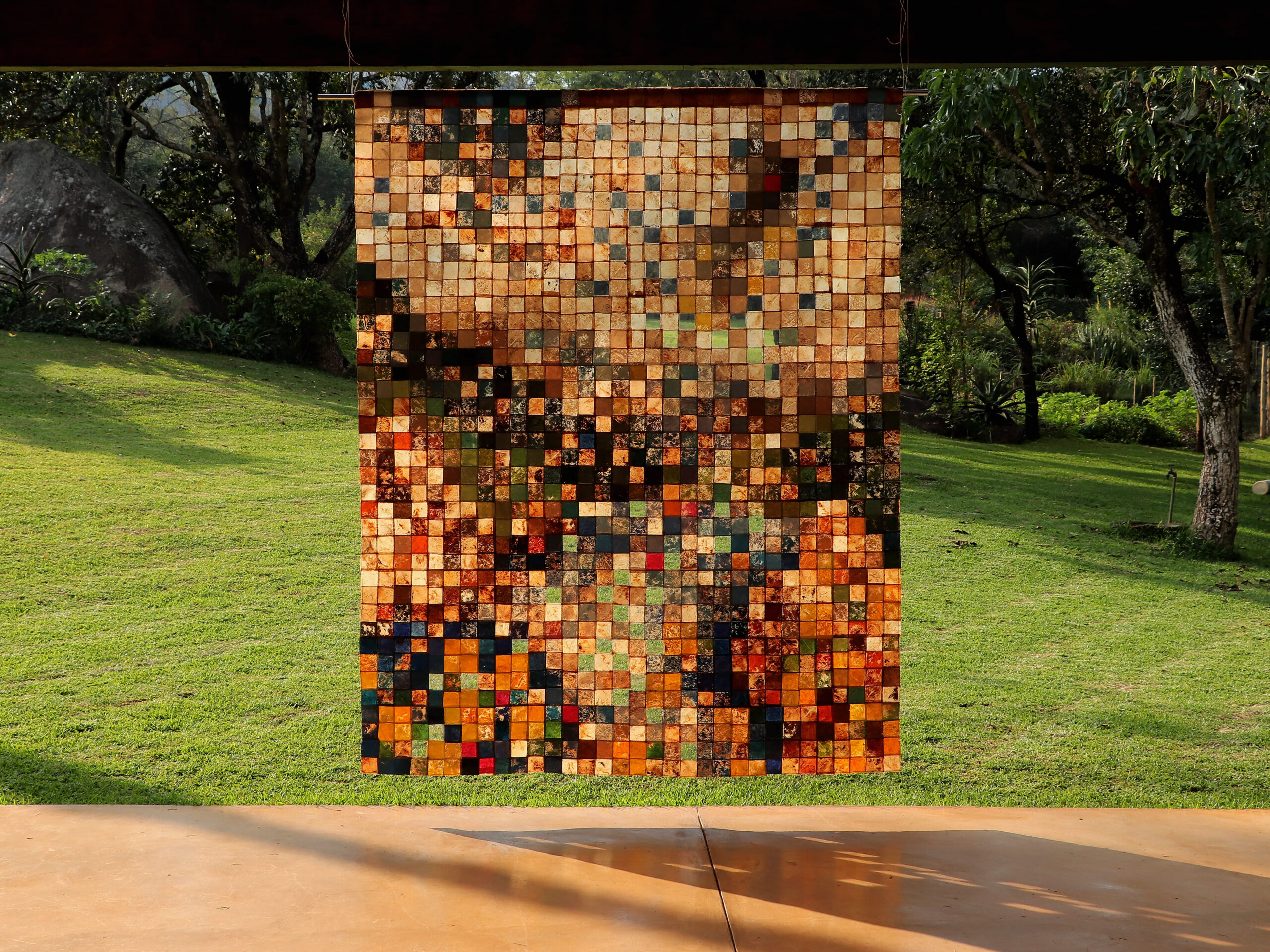
May: Inkhwekhweti: Malolotja is the quilt that began everything, and it is also, in some sense, a quilt about beginnings themselves — the particular experience of not knowing you have arrived until you are already looking back at the moment of arrival.
I stood at the rim-flow pool and looked at my home without knowing it. Looking out at the country I never expected to find so much belonging.