
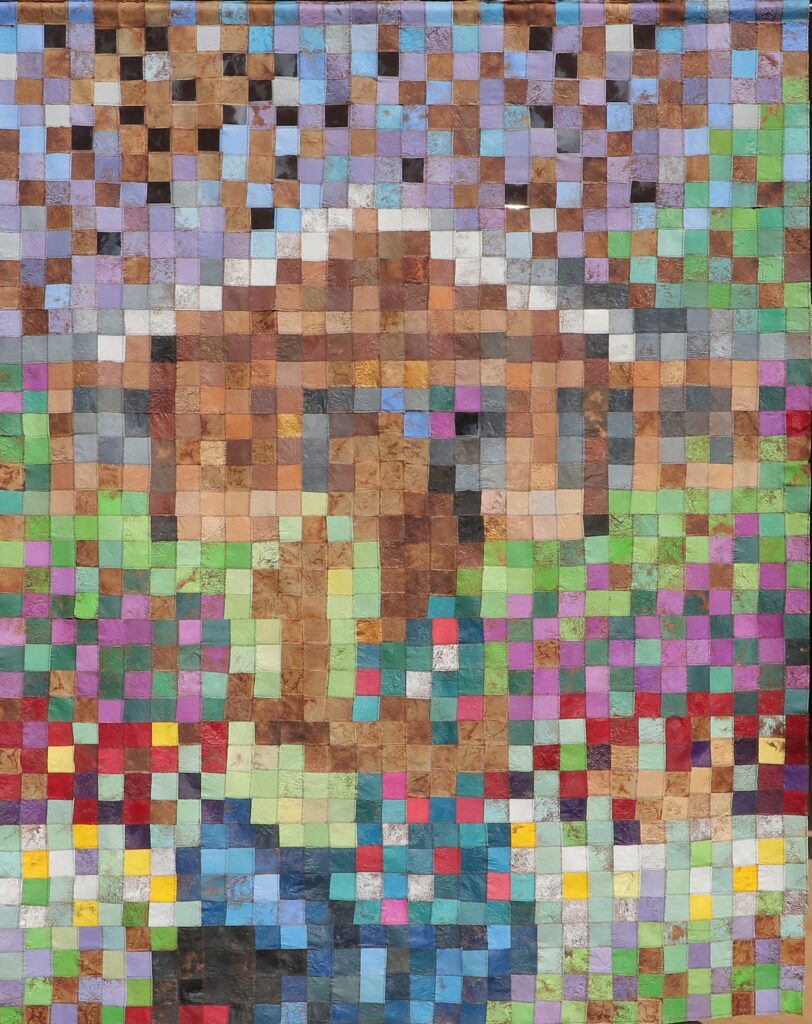
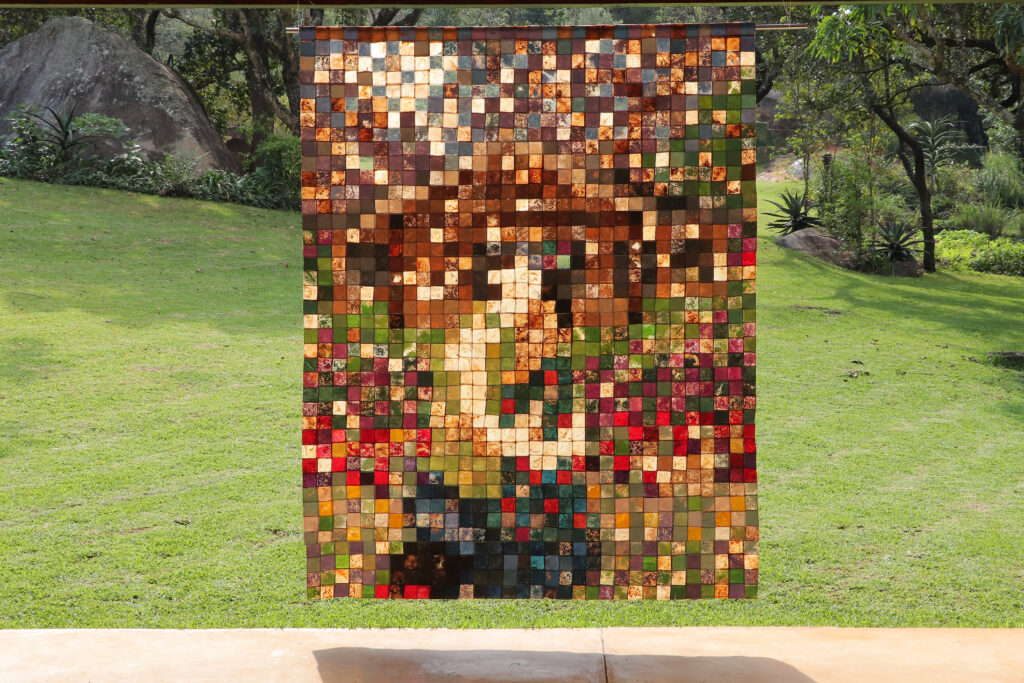
September: Inyoni: Ekhaya Thula
Frontlit
Oil on teabags
180 x 200 cm
2022-2025
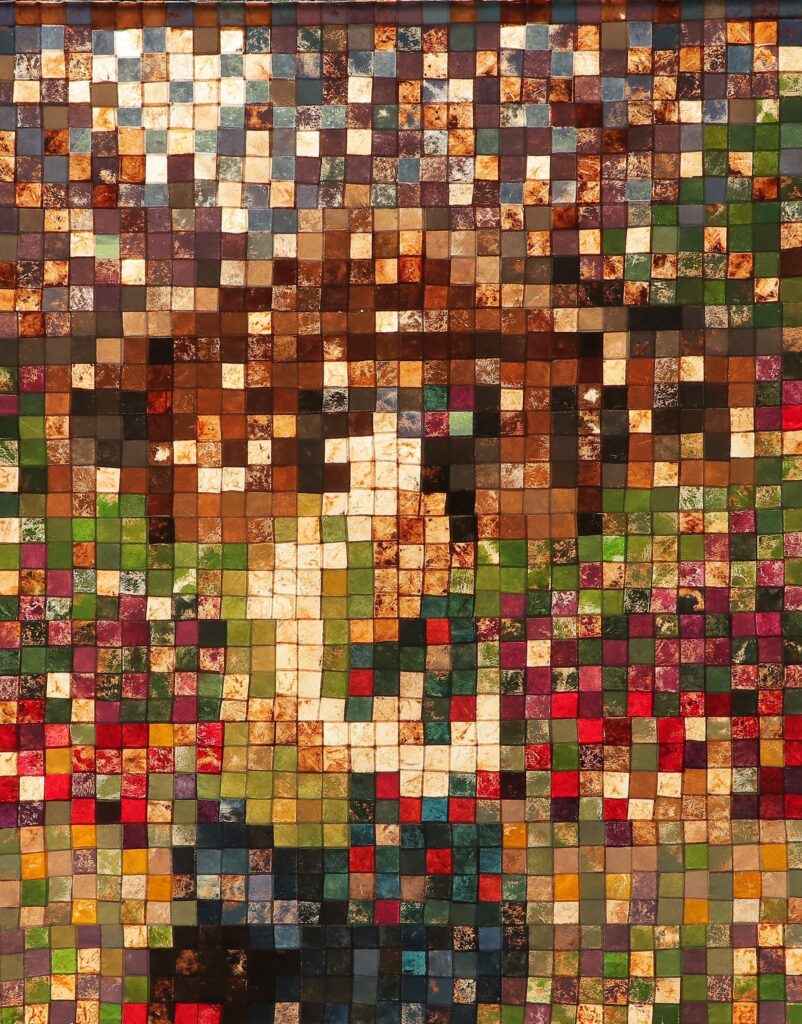
September: Inyoni: Ekhaya Thula
Backlit
Oil on teabags
180 x 200 cm
2022-2025
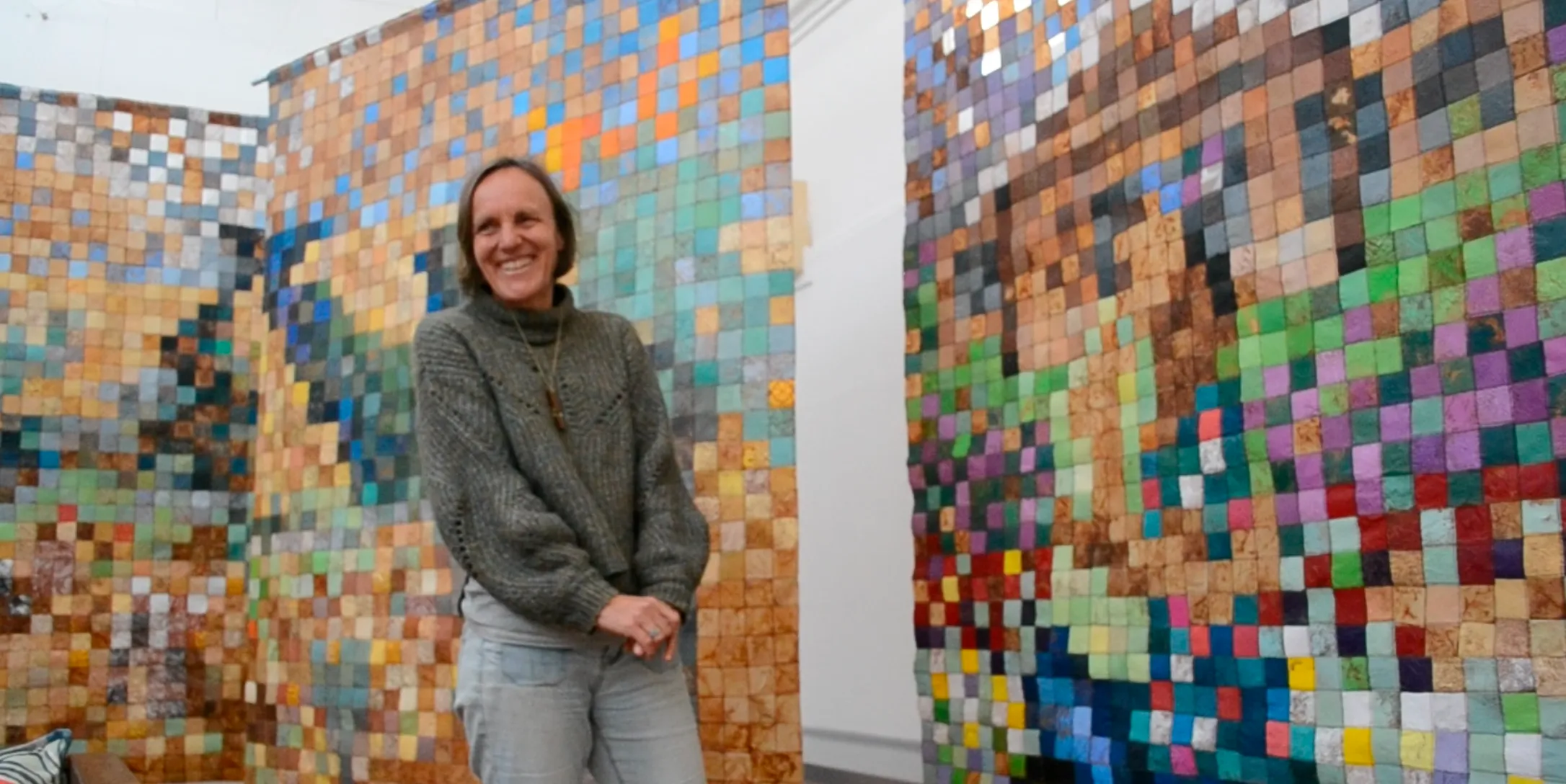
We might not have a harsh white, snowy winter in Eswatini, but nevertheless spring arrives in a vibrant eruption. Jacaranda, bougainvillea, poppies, daisies…flowers with the ambivalence of being both beautiful yet an invasive, non-endemic species.
When my family takes time to clear invasive plants such as lantana and jacaranda from the paths and forests of the neighbouring game reserve called Mlilwane, I often wonder how plants that are so beautiful can be so destructive to the environment.
The complicated beauty of a relationship that defies easy categorisation.
September: Inyoni
Birds lay their eggs during this time.
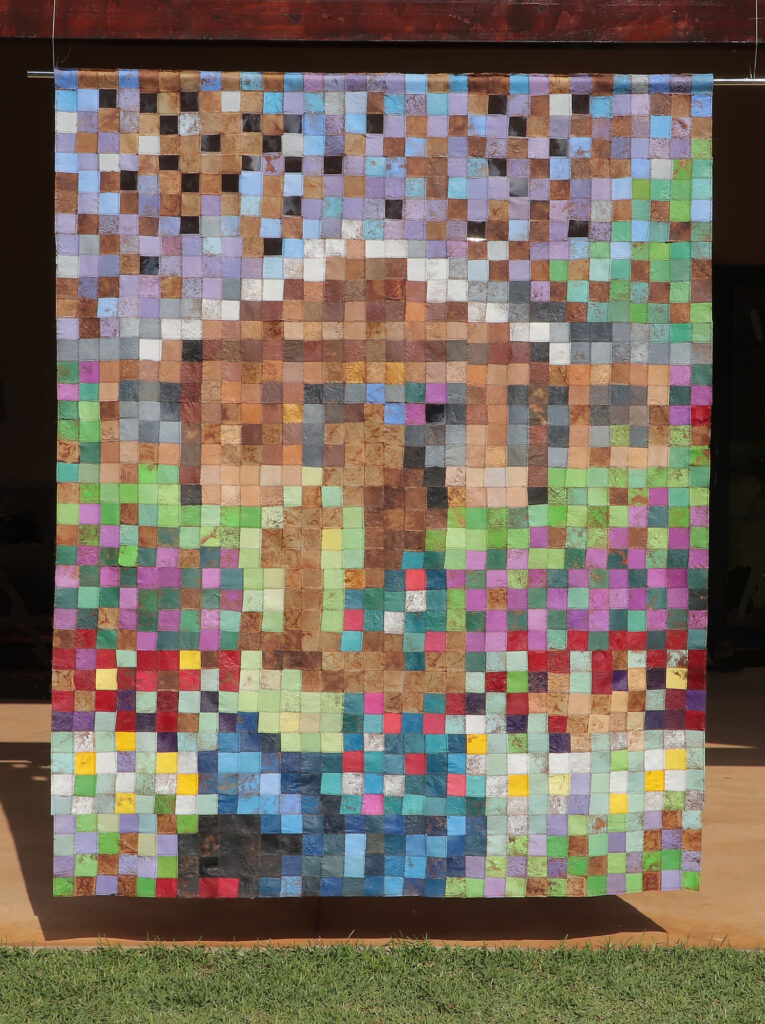
I turned fifty in September. A time to celebrate!
It is joyful, an explosion of spring colour, warm and unapologetic, the teabags arranged into a garden ablaze and two women standing in the middle of it, embracing. The women are Bongi Mlotsa and me. Bongi has worked in our home for over sixteen years. She is the one who named this quilt. Ekhaya Thula, she said. A home of peace.
I was thinking about Klimt The Kiss when I made it — his use of colour that has no interest in restraint, his floral motifs, the famous embrace. There is something in Klimt’s gold-saturated world that understands the richness of being fully inside a moment, held, surrounded. In the art quilt, Bongi Mlotsa and I embrace in a garden richly ablaze with spring colours. I celebrate beauty. I celebrate home. I celebrate friendship.
But the quilt is not only a celebration. It is also, quietly, a reckoning.
The jacaranda is a beautiful tree, but is also invasive, non-endemic, quietly destructive to the ecosystems it colonises. I find myself in that paradox, as a white woman in Southern Africa.
What Bongi and I have built over sixteen years is not a simple thing to describe, and I want to resist the temptation to describe it simply. Bongi cleans our home. There is a structural reality to that relationship — economic, racial, historical — despite our deeprooted love for each other.
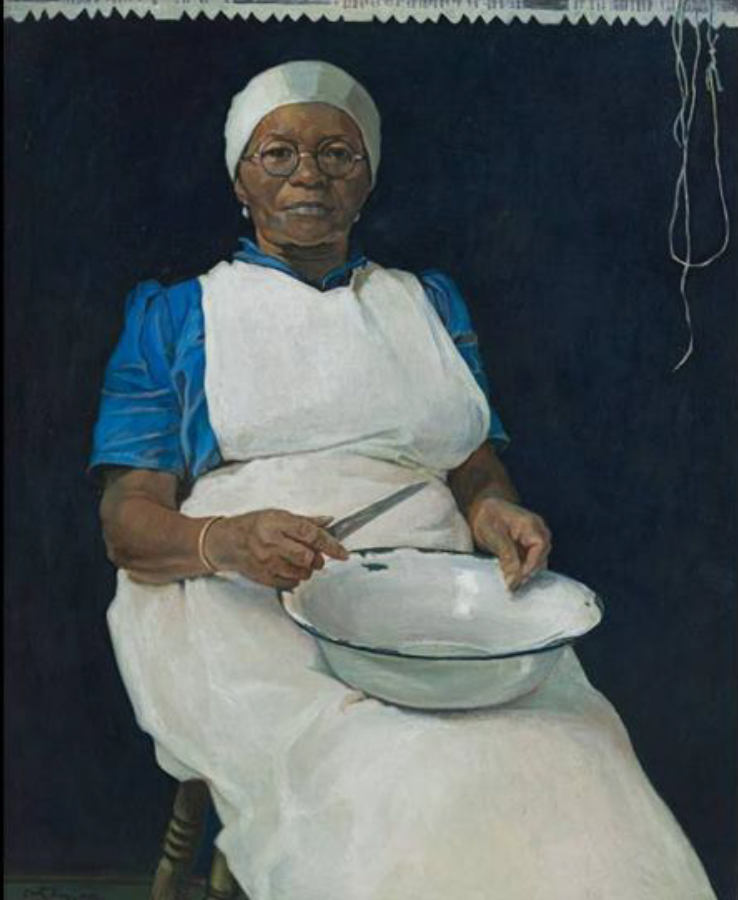
Teaching South African History of Art to students over the years, I have often discussed Dorothy Kay’s painting Annie Mavata in comparison to Irma Stern’s Portrait of a Maid. The dignity and grace with which Kay painted Mavata is striking. Dorothy Kay’s portrait of Annie Mavata honours a domestic worker, a woman who was employed in the Kay household for twenty years. The painting, completed when Annie Mavata had already retired, was important to Mavata and one that she reminded Kay to paint for a long time, as she was afraid that she was going to die without having been painted her employer.
Marion Arnold (1997), writing about Dorothy Kay’s portrait of her domestic worker Annie Mavata, observes:
By painting her servant, she acknowledges the fact of servitude in South African society. Rather than commenting on the morality of the situation, she celebrates the life of a woman who, in earning her living from considerate employers, gave her ‘madam’ the freedom from ‘woman’s work’ within her home that enabled her to escape the restrictions of gender and devote herself to art.
This quote underpins my choice of including Bongi Mlotsa in September: Inyoni: Ekhaya Thula. The art quilt is a celebration of an intimate, yet complex, entangled relationship. It is true, just as it was true then for Dorothy Kay, that without the consistent, conscientious work that Bongi invests in our family’s life and home every week, I would struggle to juggle all the roles I hold dear; wife, mother, teacher, student, and artist – a truly privileged position to be in. This art quilt celebrates the relationship two women under one roof, whose lives are inextricably entangled.
I ask Bongi what she thinks of us hugging in the quilt and she says:
“The hug is not just a hug. What can I say? It means our love, our trust…you’ll understand with your English. ‘Kwetsembana’… We trust each other. It’s more than ‘Kungetulu kwelutsandvo lwetfu’, meaning our trust is more than our love”.
Bongi named my quilt. I painted her into the centre of it. We have both grown as wives, as mothers, as friends, as women navigating the same country from very different positions within it. The quilt holds both truths, the way a garden of invasive flowers holds both beauty and the question of what it is displacing.
Ekhaya Thula. A home of peace.
I turned fifty in this home, in this garden, in this complicated and beloved country, with this woman beside me. Spring was insisting on itself, in colours that have no interest in restraint.
I celebrate beauty. I celebrate home. I celebrate relationships that defy easy categorisation and ask something of me in the asking.