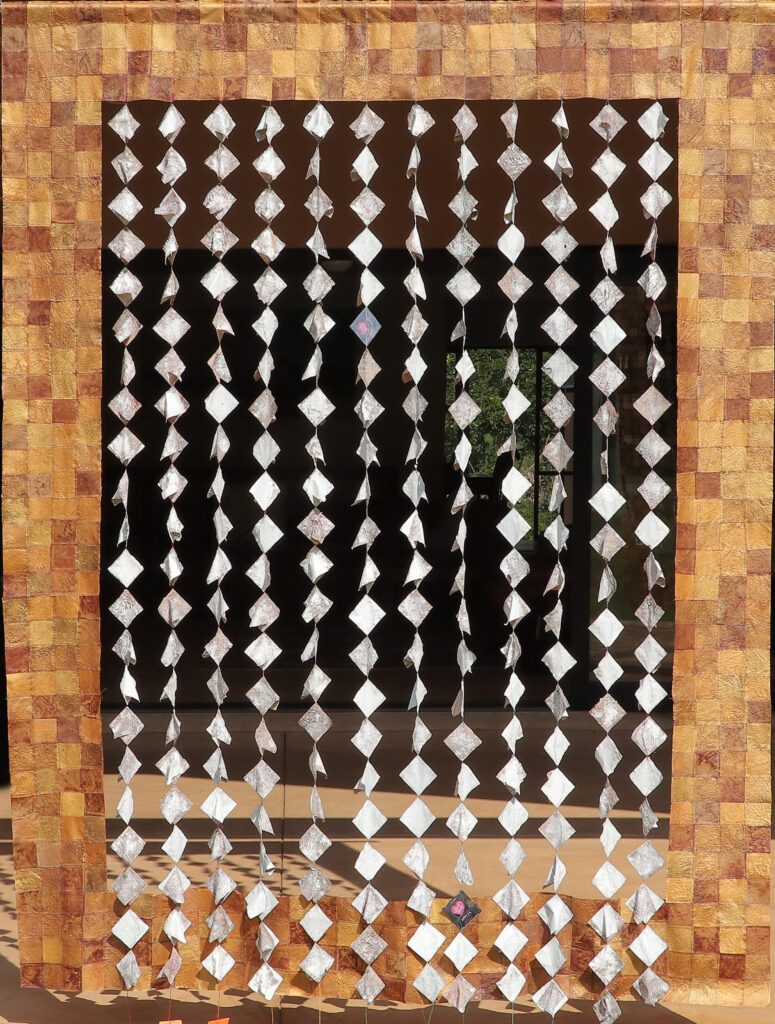
February: Indlovana: Mirror, Mirror
Frontlit
Oil on teabags
180 x 200 cm
2022-2025
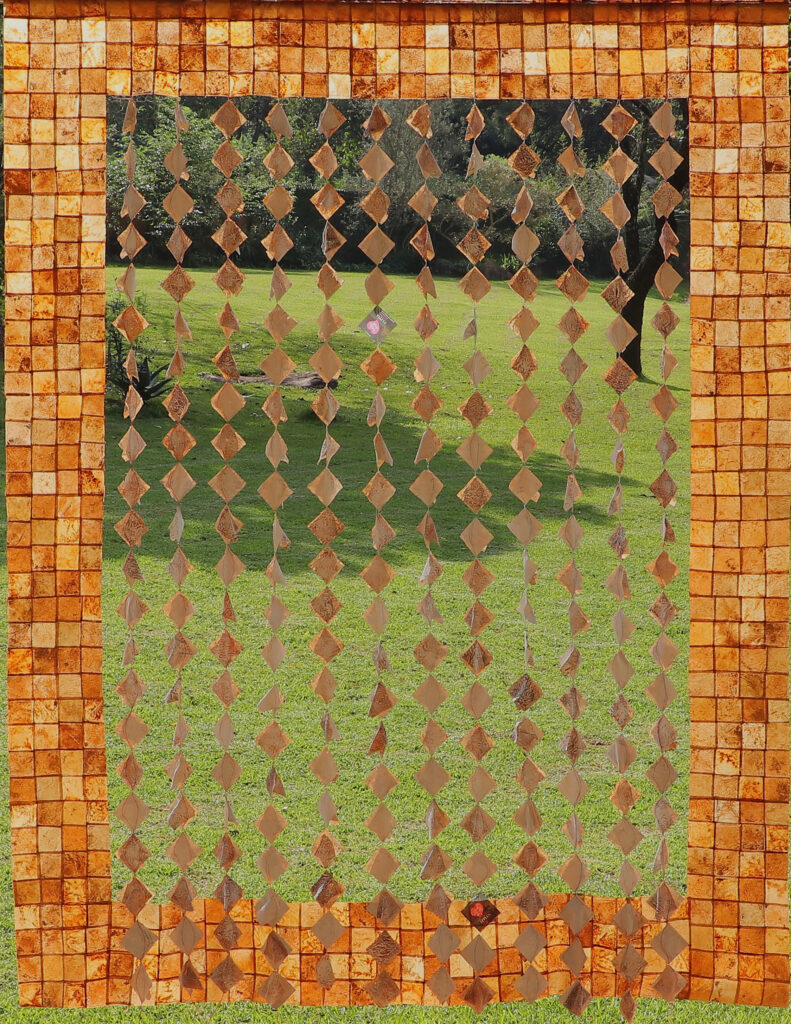
February: Indlovana: Mirror, Mirror
Backlit
Oil on teabags
180 x 200 cm
2022-2025
I was attending an open studio session with my postgraduate colleagues at the Wits School of Arts in 2024. Someone — not addressing me directly, but in my presence — said:
“Mirror, mirror on the wall, who’s the fairest one of all? Not you, white bitch, and don’t you forget it.”
The words were not aimed at me. And yet they landed in me. They left a mark that I sat with for a long time before I understood what to do with it, which was to make a quilt.
February: Indlovana
Elephants give birth in this month; the name of the month signifying the small elephant.
The reference has two sources, and both matter.
The first is Snow White — the fairy tale mirror, the question of fairness, the poison lurking inside something that looks like a gift. The second is Carrie Mae Weems, the American artist whose 1987–88 body of work Ain’t Jokin confronts white supremacy and racial discrimination with unflinching directness. In one photograph, Weems staged herself holding a frame as though it were a mirror, with the reflection showing a white, veiled fairy godmother gazing back at her — haughty, wand and all. The caption reads: “Looking at the mirror, the black woman asked, ‘Mirror, Mirror on the wall, who’s the fairest of them all?’ The mirror says, ‘Snow White, you black bitch, and don’t you forget it!!'”
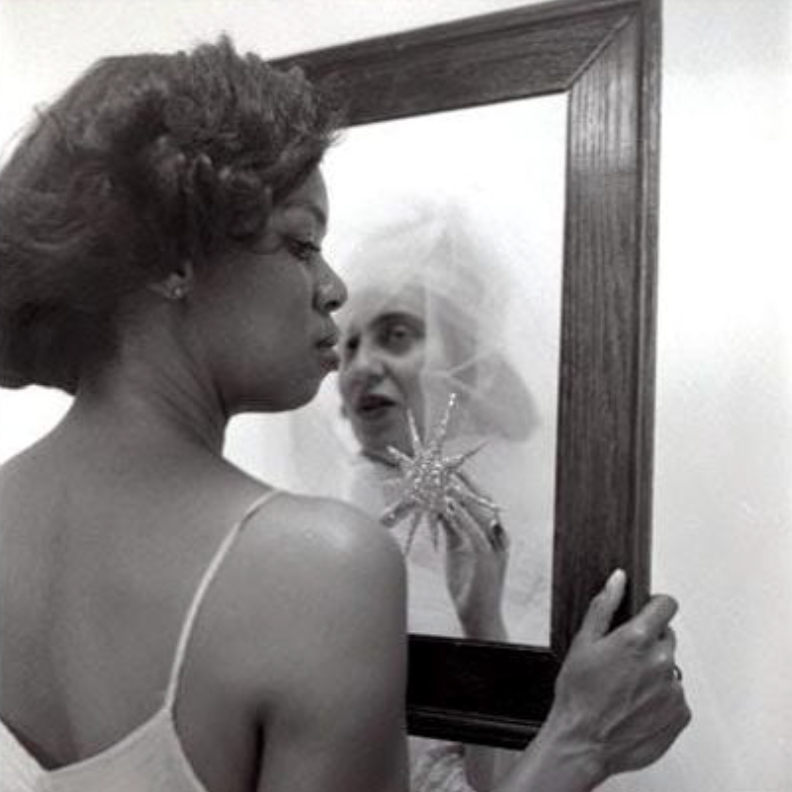
Weems’ work brings up in me two things simultaneously: shame at my South African past, and a profound recognition of the power of visual narrative to expose what dominant culture would prefer to leave unsaid.
The scholars who write about Weems describe what she is grappling with as social melancholy and double shame. Social melancholy is the inability to mourn the loss of a lovable self because that self finds no affirmation in mainstream culture — stereotypes attacking not just dignity but subjectivity itself, the very sense of who you are. Double shame names the two-sided wound: the shame inflicted from outside by an aggressive, contemptuous gaze, and the shame rising from within, the unmet expectation, the deep embarrassment of being seen and found wanting.
I carry a version of this, though not the same version.
As a white South African woman, I carry two kinds of shame that press against each other uncomfortably. I am ashamed of the painful history I come from — the colonial past, apartheid, the machinery of oppression that gave white people like me advantages we did not earn and did not refuse. And I am also, sometimes, the object of race-shaming in spaces where whiteness marks you as suspect, as Other, as not you.
Snow White with two poison apples.
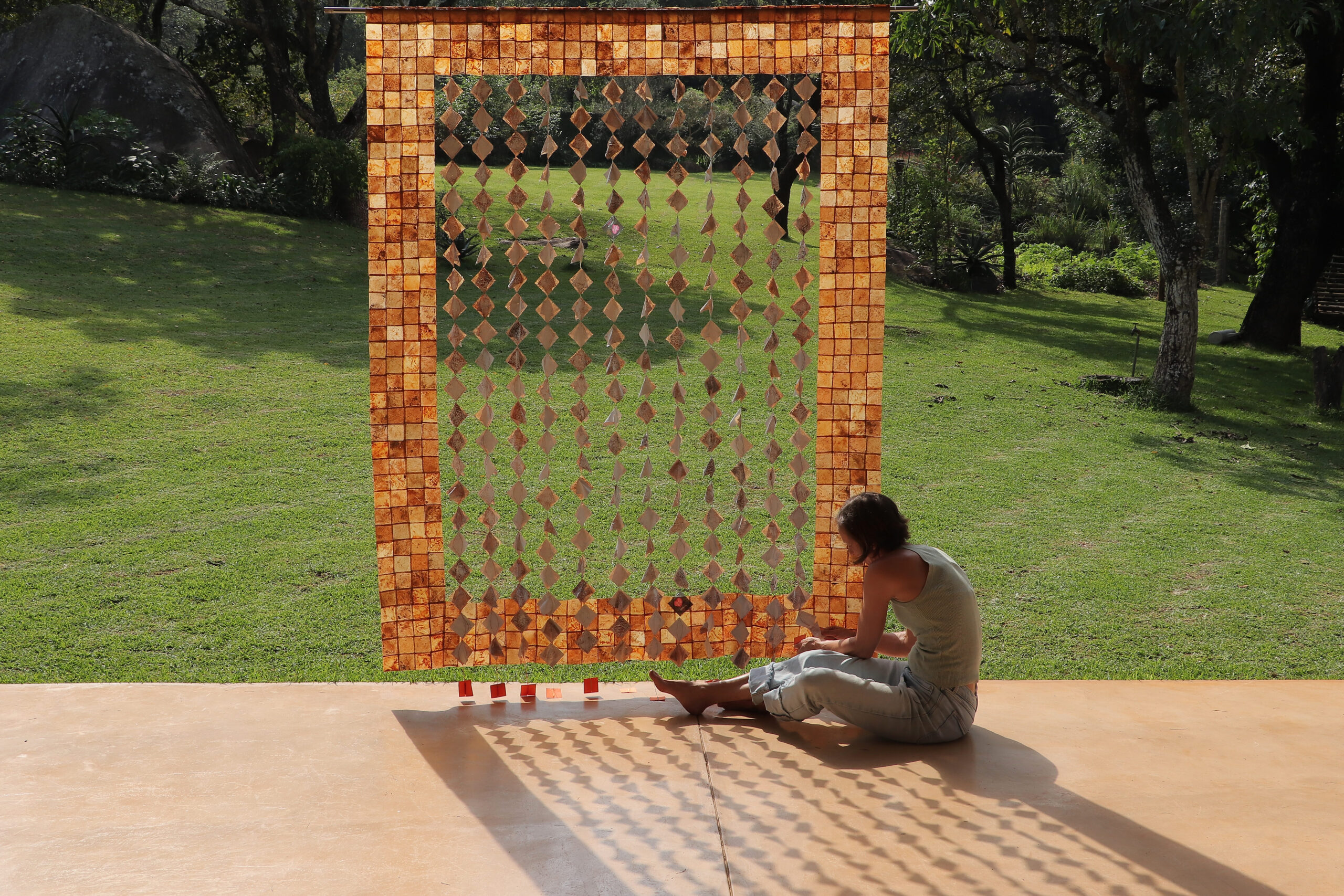
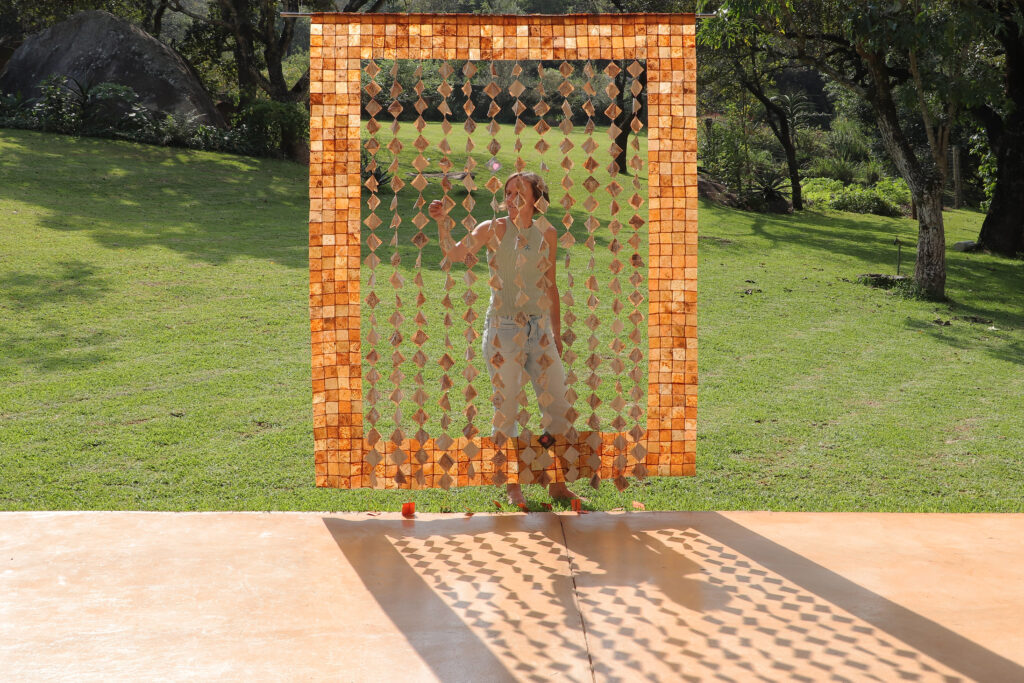
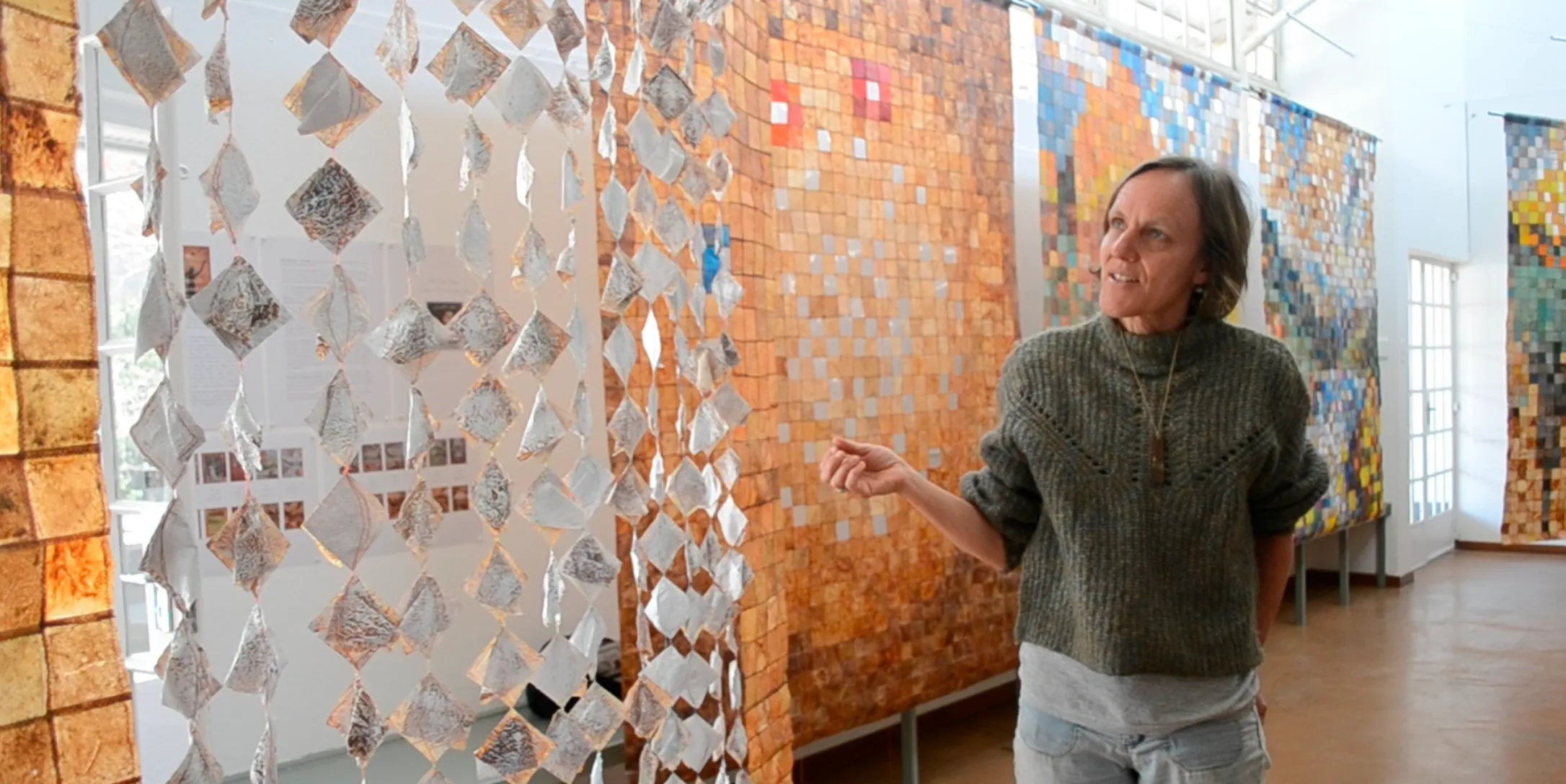
The golden mirror frame for February: Indlovana: Mirror, Mirror holds strings of cascading white teabags, crumpled to signify tissues and tears. They are held together by rainbow threads, like the ones that form the outline of my body in January: Bhimbidvwane: Kamhlaba. They speak of hope, even in times of sadness and shame. As a white South African, shame is not necessarily a negative emotion, but rather an appropriate response to the wrongs of the past that still manifest in the present.
The ‘mirror’ is not a reflective surface, but a cascading curtain to be looked through, to the other side, as it were. This space opens a window to connect and to understand, albeit through a veil of sadness. The reference to the social melancholy of double shame, both race-shaming and the inner shame-of-race are two types of shame I carry with me. The heaviness of a South African colonial and racialised past is a weight I carry into my present reality. As much as I may be shamed for being white, I am also ashamed of being white.
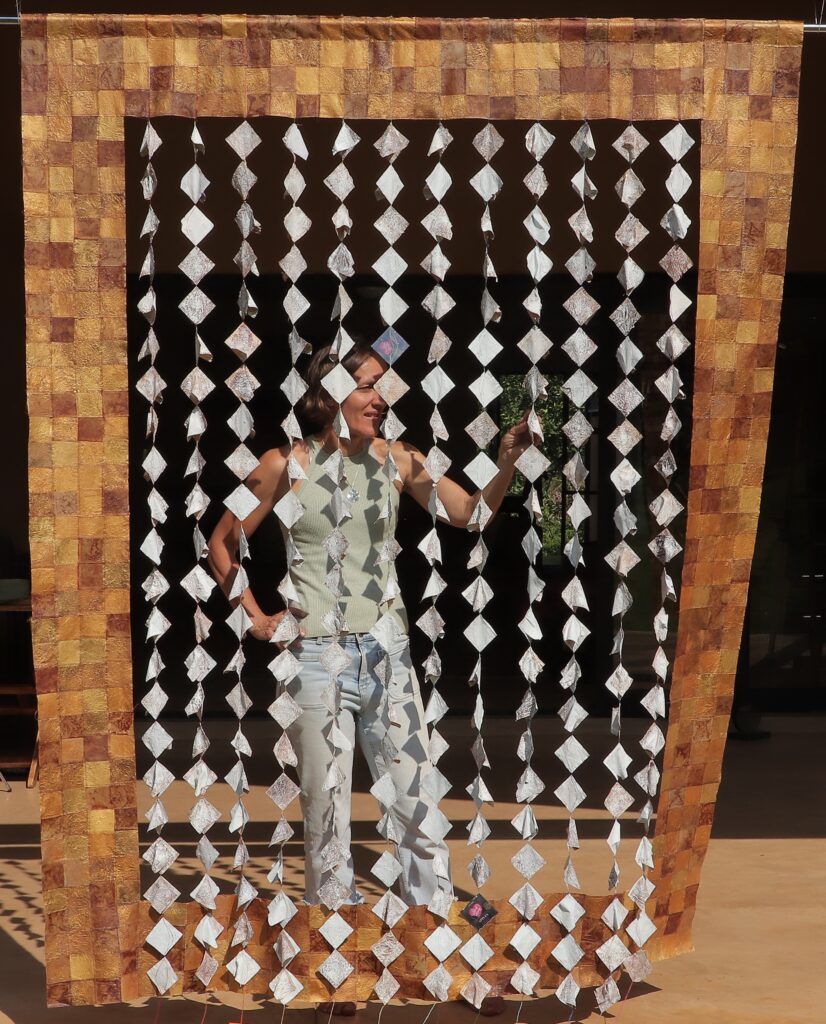
Marion Arnold writes that a mirror promotes revelation, but because it reflects a reversed, two-dimensional image, it conveys only limited truth. I have come face to face with myself through four years of making these twelve quilts — sometimes uncomfortable, sometimes comfortable, sometimes, as I wrote in my dissertation, uncomfortably comfortable. The mirror in February is that process made visible. Facing inward. Turning the image over. Looking for what is on the other side.
February is difficult. It was difficult to make and it is difficult to write about. But finding true belonging in the Southern African context requires this sort of uncomfortably comfortable reflection.