January: Bhimbidvwane: Kamhlaba
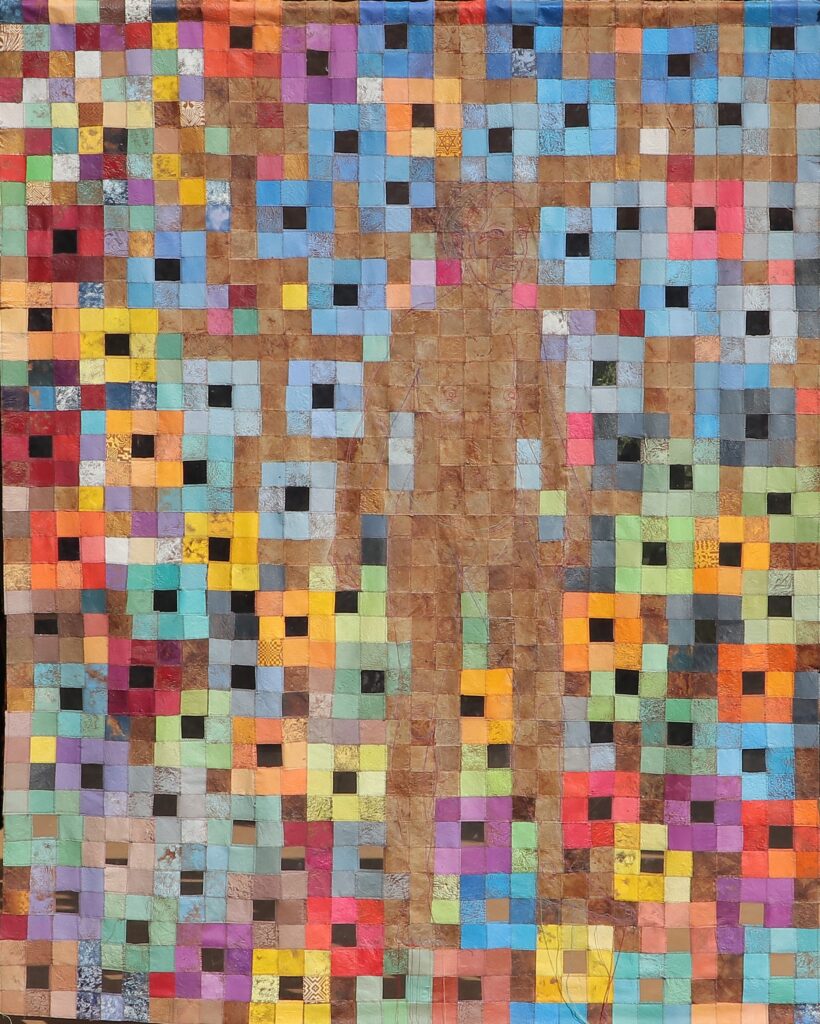
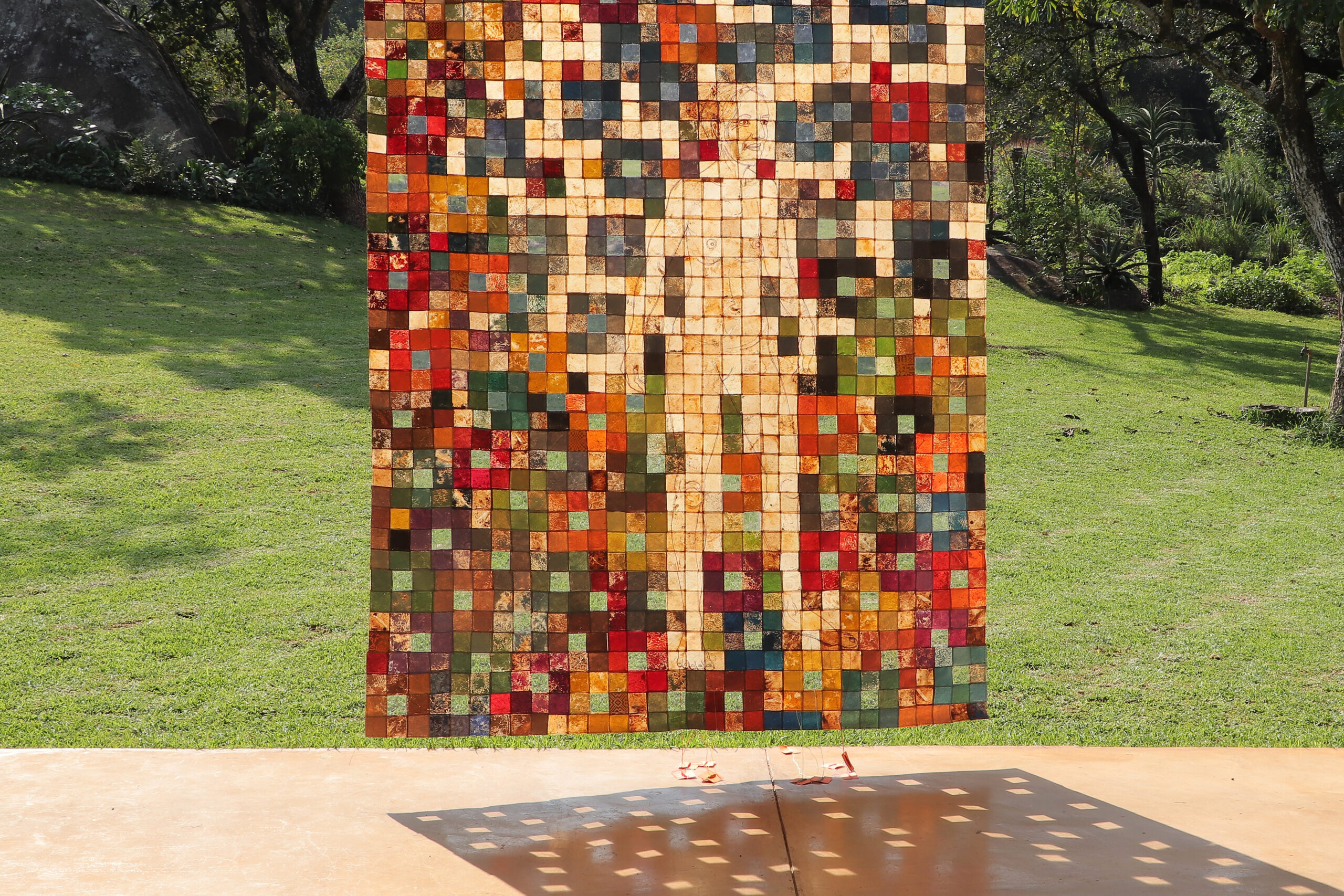
Frontlit
Oil on teabags
180 x 200 cm
2022-2025
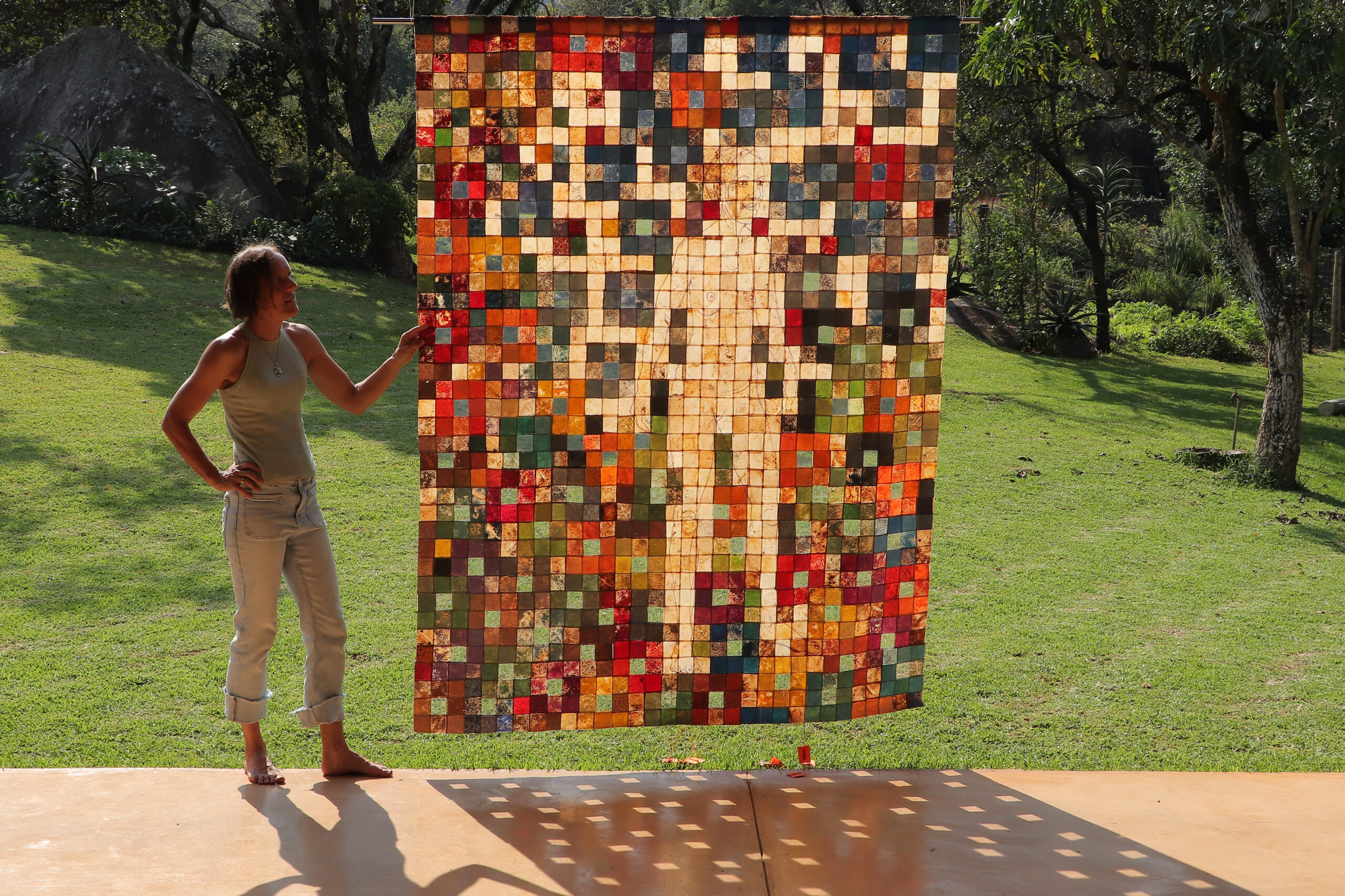
January: Bhimbidvwane: Kamhlaba
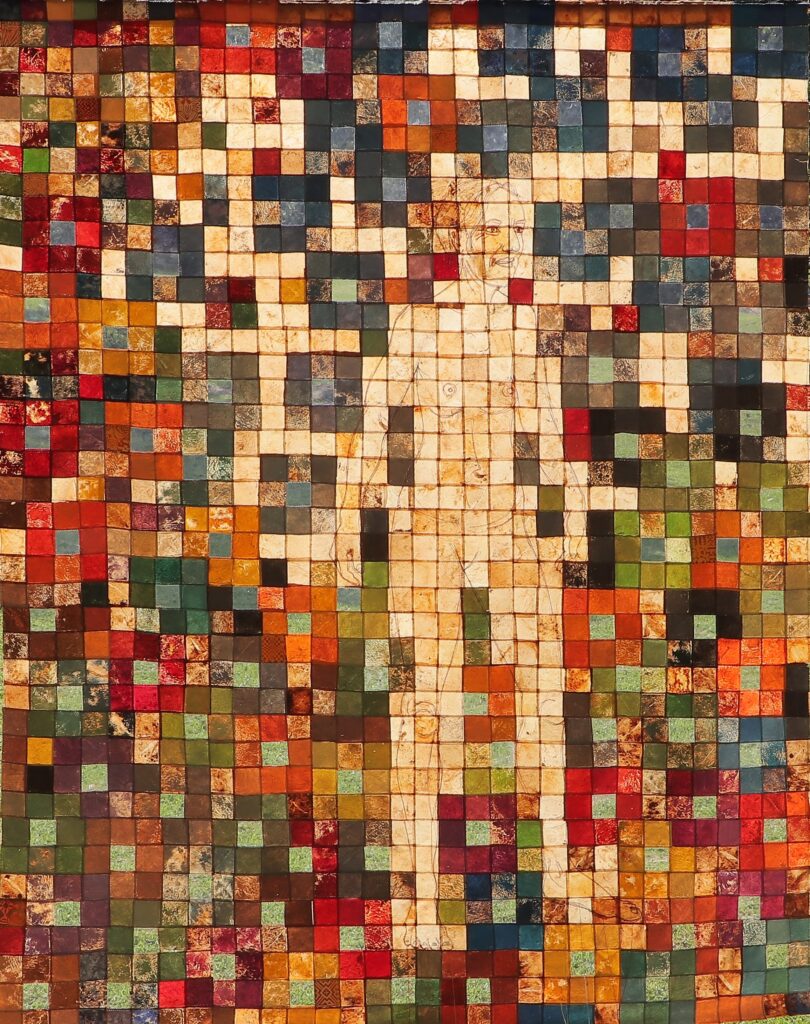
Backlit
Oil on teabags
180 x 200 cm
2022-2025
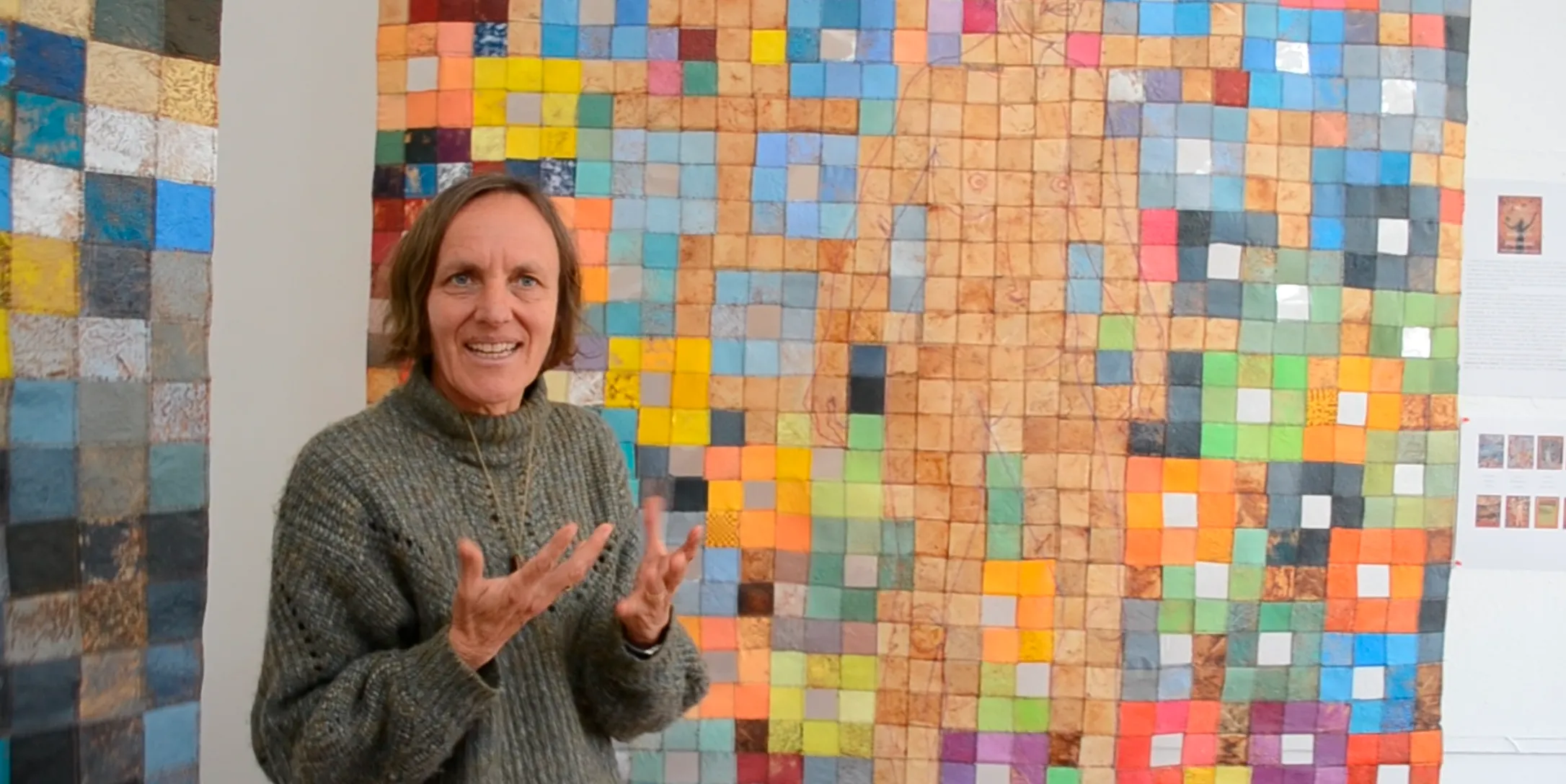
During the 2023 Annual Visual Arts Exhibition at Waterford Kamhlaba, I spread a large cotton sheet on a table in the exhibition space. Beside it I placed a box of coloured teabags. And then I stepped back.
A handwritten invitation asked viewers to choose a teabag and place it in any square on the grid. In a journal alongside the cloth, they could write down the reason for their choice. What came back was this:
“I chose the colour red, soft warm red, because it represents passion, life, and love. Every piece of art should have some of that in it.”“
“I placed yellow for the African sun and gold for heaven.”
“I put a purple teabag on C3 because my girlfriend’s name starts with a C and my favourite number is 3.”
Each of these choices, made by a student or colleague or visitor passing through an exhibition space, is now sewn into the quilt.
January: Bhimbidvwane
The month of feasting, when the king tastes of the first fruit before the celebration of harvest.
Once the community had placed their teabags, I faced a problem: how to add to what was already there without intruding on it. Randomly placing my own colours felt wrong — an imposition on a design that had emerged from other hands, other choices.
So I did two things instead.
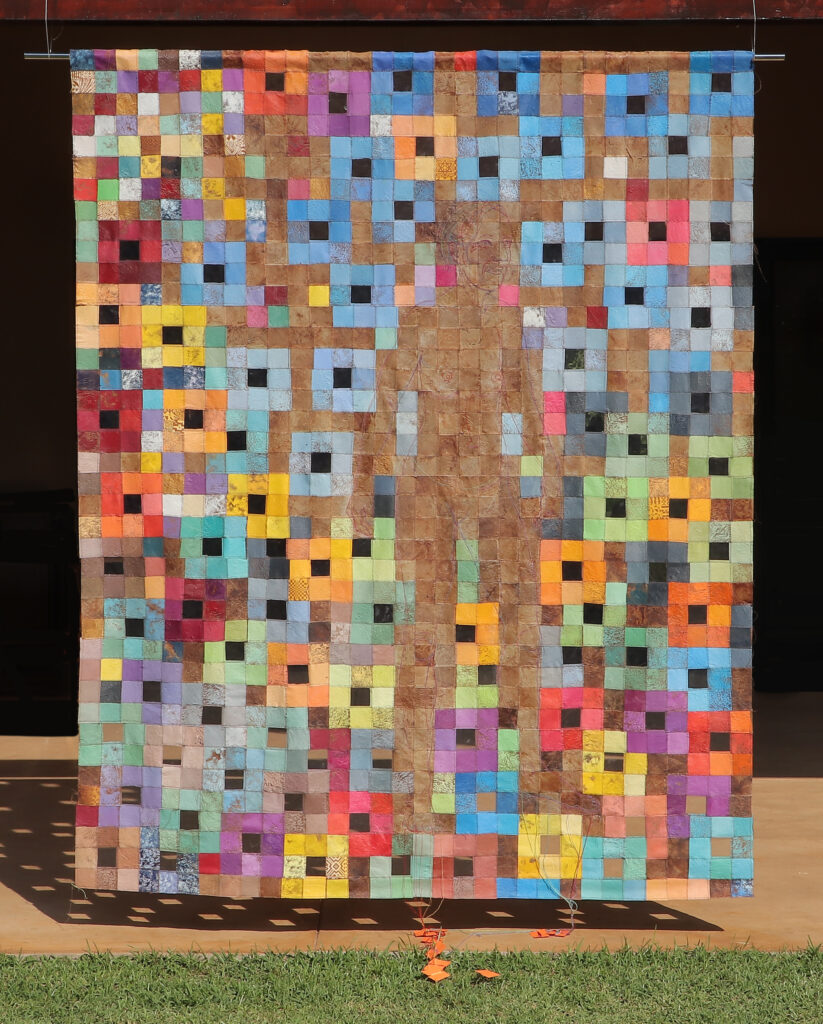
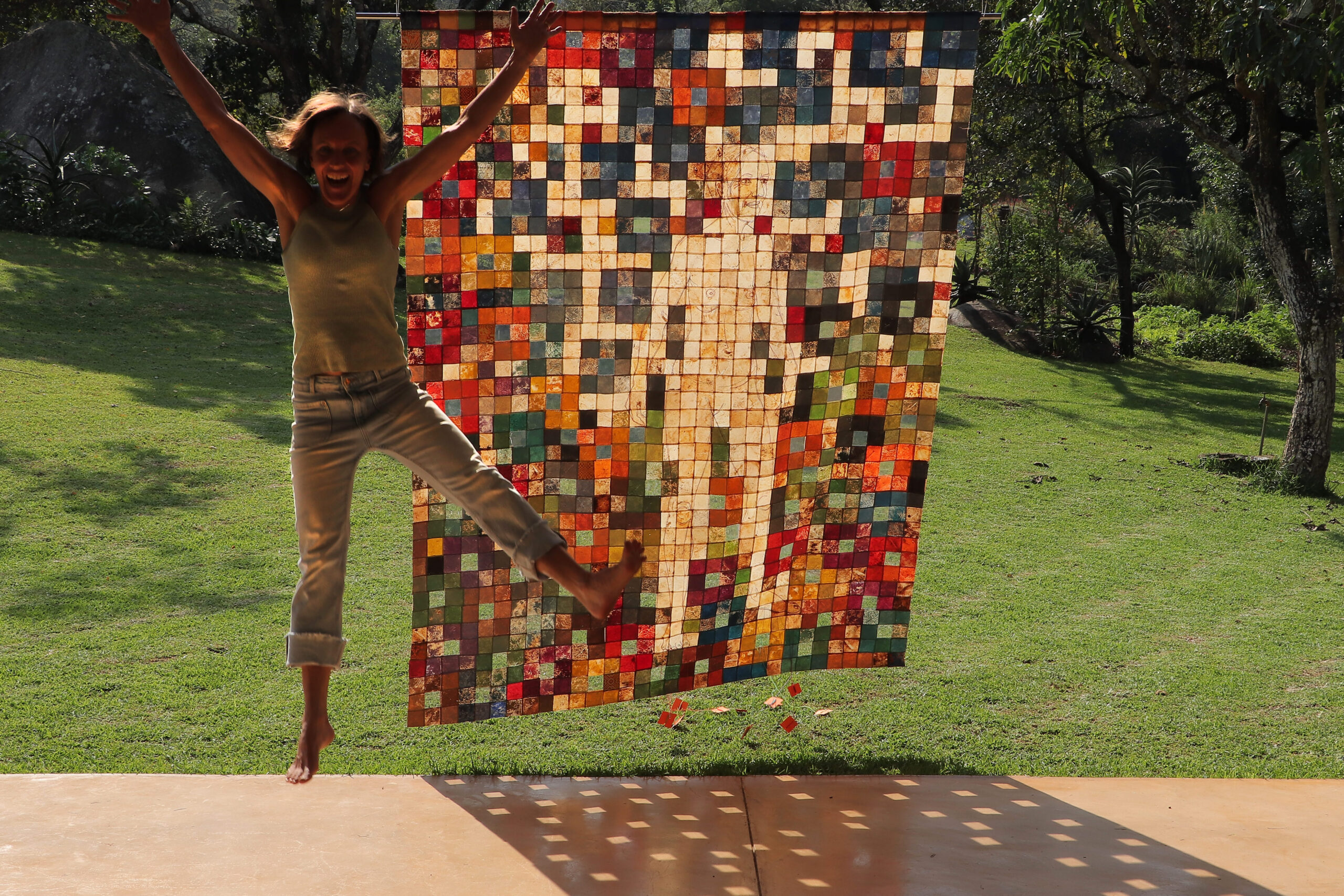
First, I created a life-sized self-portrait at the centre of the quilt, made entirely from natural, unstained teabags. Light passes through natural teabags more easily than through painted ones, and so when the quilt is backlit, the portrait glows — the outline of my body illuminated, stitched into the Kamhlaba field in twelve rainbow-coloured threads. Hidden in the daylight. Revealed in the light.
Second, I added three-by-three colourwash blocks in shades of single hues — the most direct echo in all twelve quilts of the colourwash technique I first learned in Gobabis, in those early years of wanting so badly to be enfolded into a quilting community that did not yet know me. The three elements — community teabags, self-portrait, colourwash blocks — came together into a whole.
Kamhlaba means, in SiSwati, ‘of the world’. The name was given by King Sobhuza II when the school I teach at Waterford became a United World College — one of a global network of schools built on the belief that education can be a force for peace across cultures, nations, and backgrounds. Sobhuza’s speech at the naming captures what the school has always aspired to be:
“Wherever you are in this world. The earth does not distinguish who you are. You live in it, whatever your colour, whatever your religion, whatever your race. You live in it and it does not try to ostracise you or show difference to what you are.”
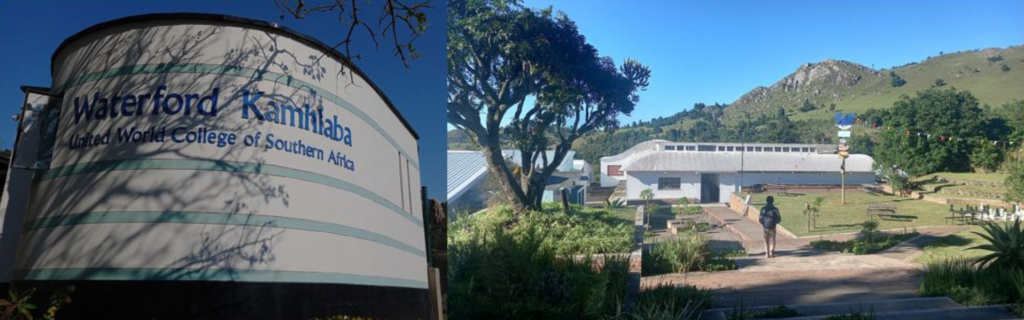
Right: Walking down to the Sheila and Richard Attenborough Fine Art Centre.
I have taught Visual Arts at Waterford Kamhlaba for years. I work in a school that opened its doors in 1963 in direct defiance of apartheid — the first multiracial school in southern Africa — that educated Zindzi and Zenani Mandela while their parents were imprisoned, that today holds students and staff from over sixty nations. Kurt Hahn, the German Jewish educator who was instrumental in founding the UWC movement after World War II, happens to be a distant relative of my children. My identity and the identity of this school are entangled in ways I am still tracing.
And yet. Even in places built on the most aspirational vision of belonging, belonging remains fragile. After Covid, after Black Lives Matter, after years of political unrest in Eswatini, relationships at WK were frayed. Common ground was hard to find. The distance between people — ideological, cultural, personal — felt vast.
It is in this context that I keep returning to tea.
Nelson Mandela and the Viljoen twins — Constand, a general in the South African Defence Force, and Braam, an anti-apartheid activist — met in 1993 at what should have been an impossible table. Rutger Bregman describes Constand’s memory of it: Mandela asked if he took tea. He said yes. Mandela poured it. Milk? Yes. Sugar? Yes. All I had to do was stir it. From that cup of tea, a negotiation began that helped prevent civil war.
The miracle cure for prejudice, the psychologist Gordon Allport concluded after years of research, is contact. Nothing more, nothing less. The teabags in my art quilts carry that history — the colonial entanglement of tea, yes, but also its extraordinary capacity to create connection across the most unlikely distance.
January holds all of this. The community hands placing coloured teabags into a grid on a cotton sheet, each one a small declaration of what they love or fear or hope for. My own body, hidden in plain sight at the centre, stitched in rainbow thread. The ambivalence, even in places whose guiding principles foster unity and intercultural understanding, of fragile relationships and a tenuous sense of belonging.
The simple act of sharing a cup of tea, allowing for time and conversation to forge connections is imbedded in the materiality of the thousands of teabags sewn together to form one art quilt.