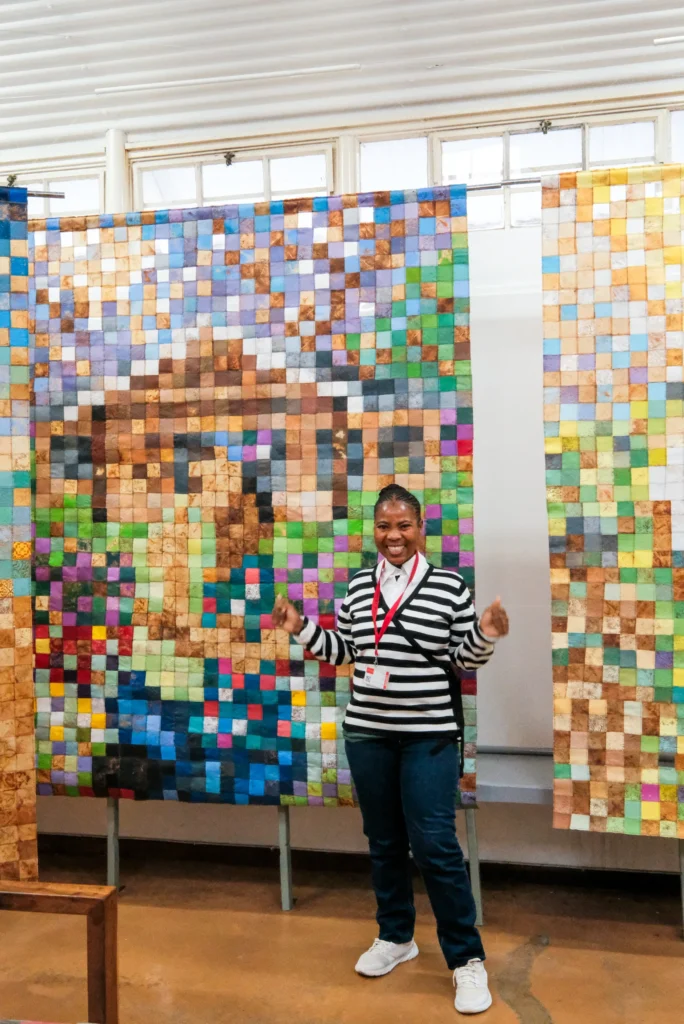
July 2026. Mbabane, Eswatini.
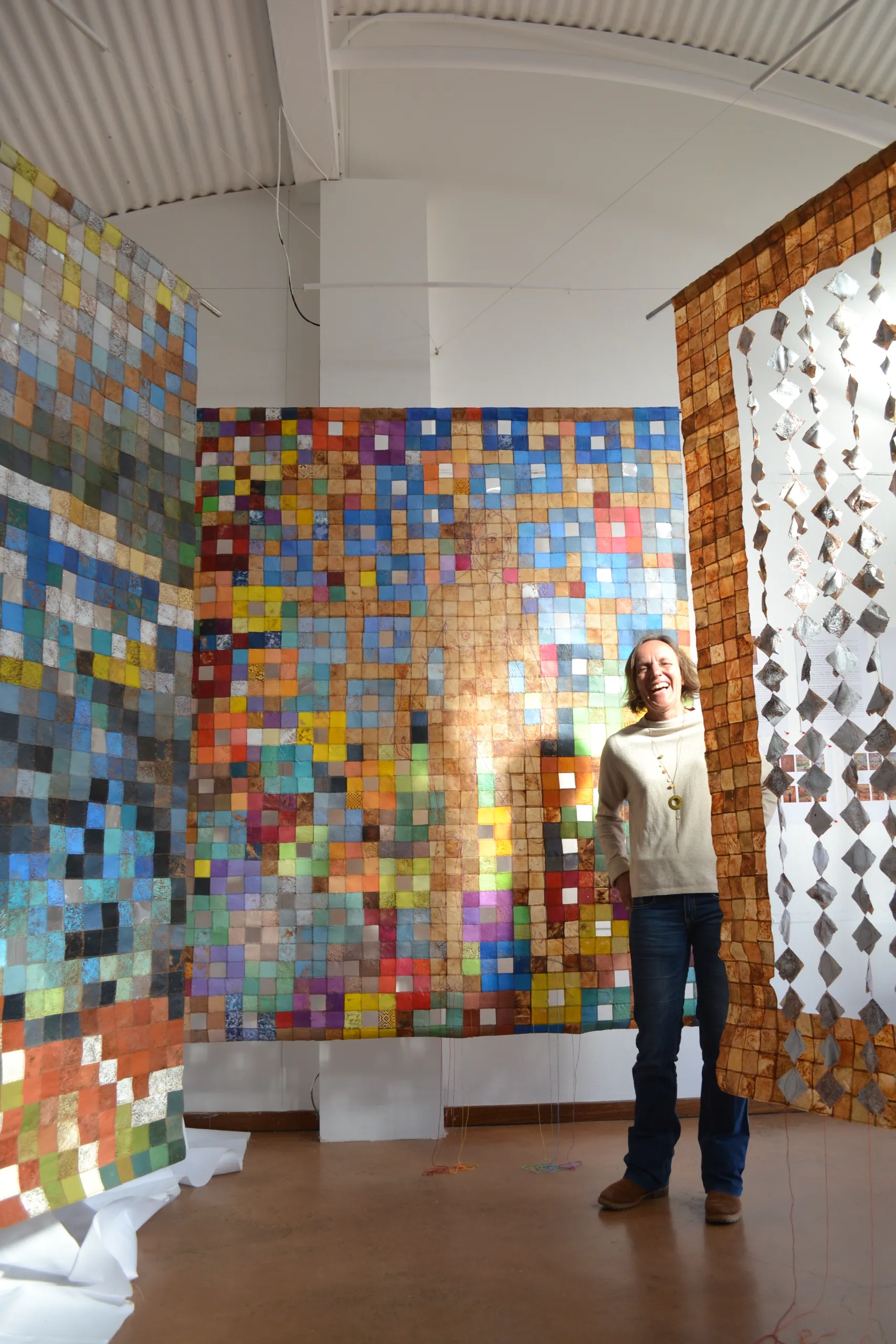
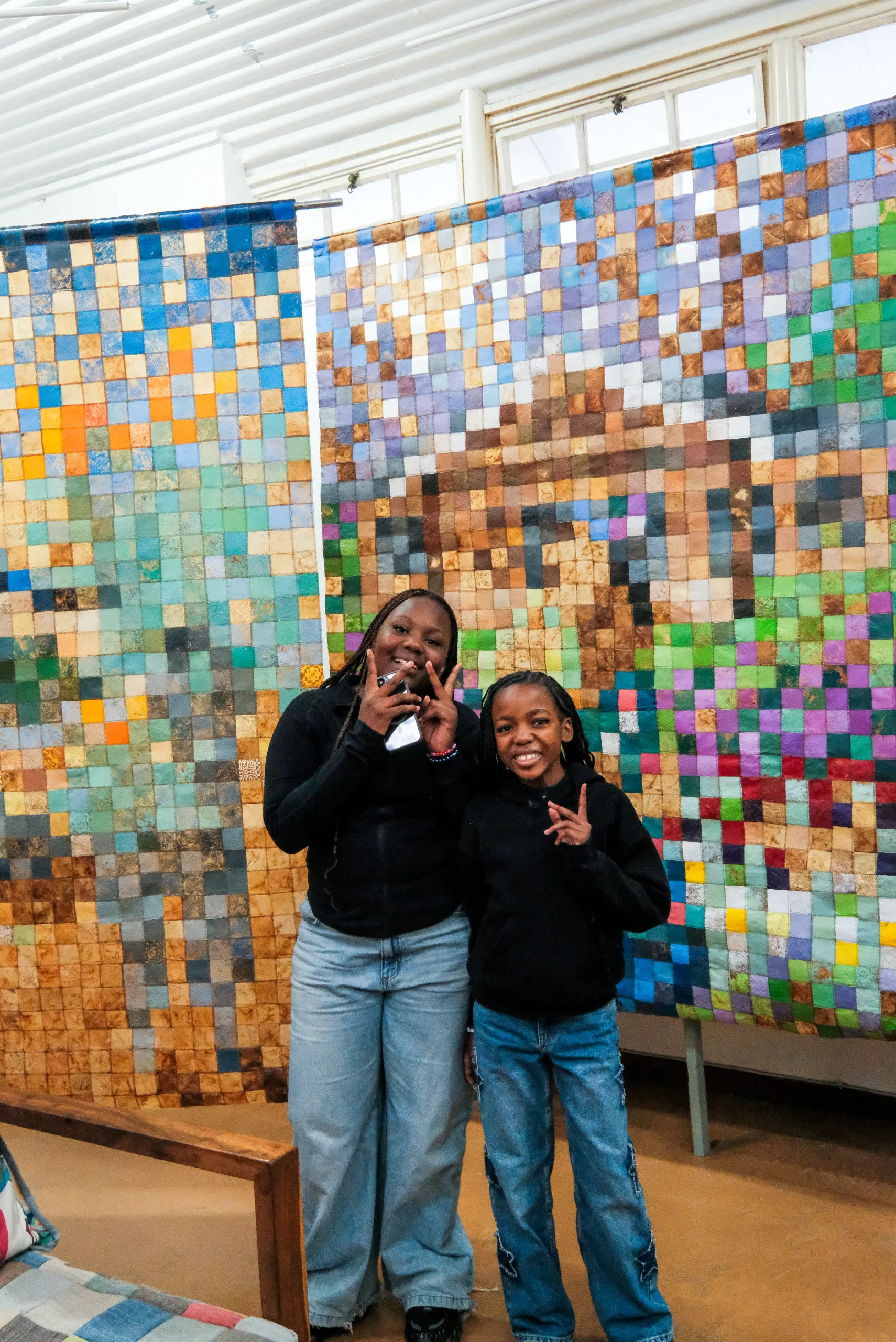
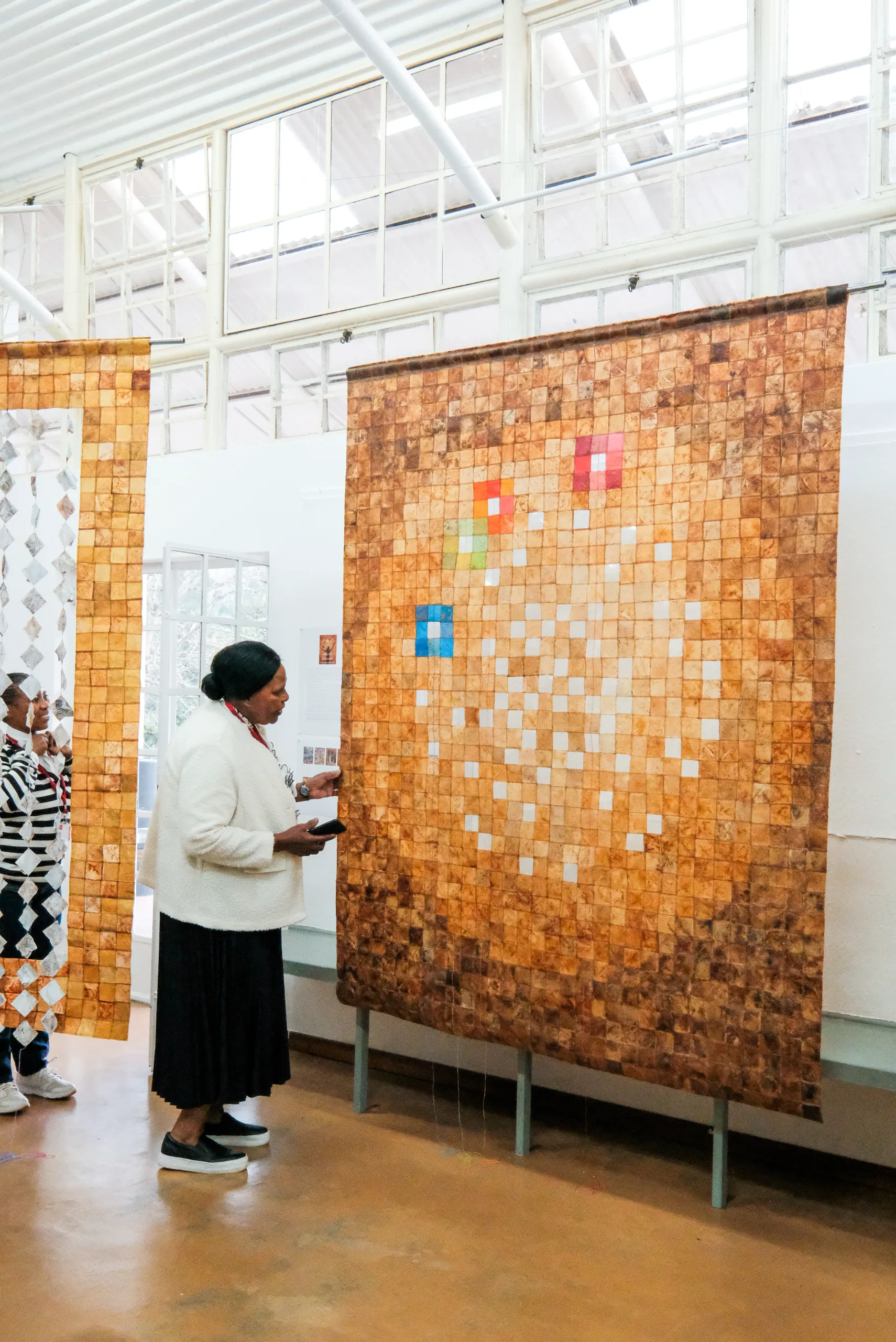
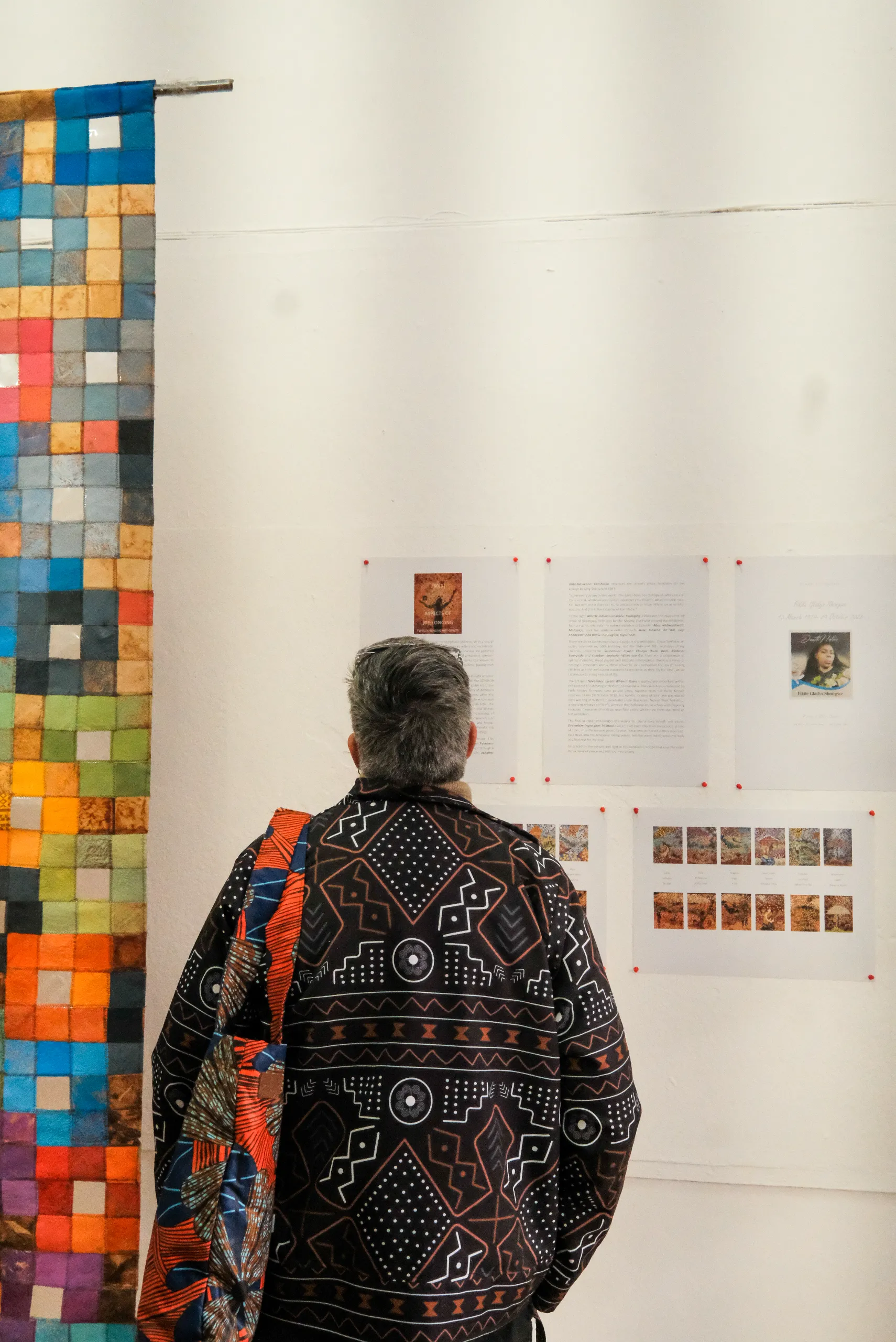
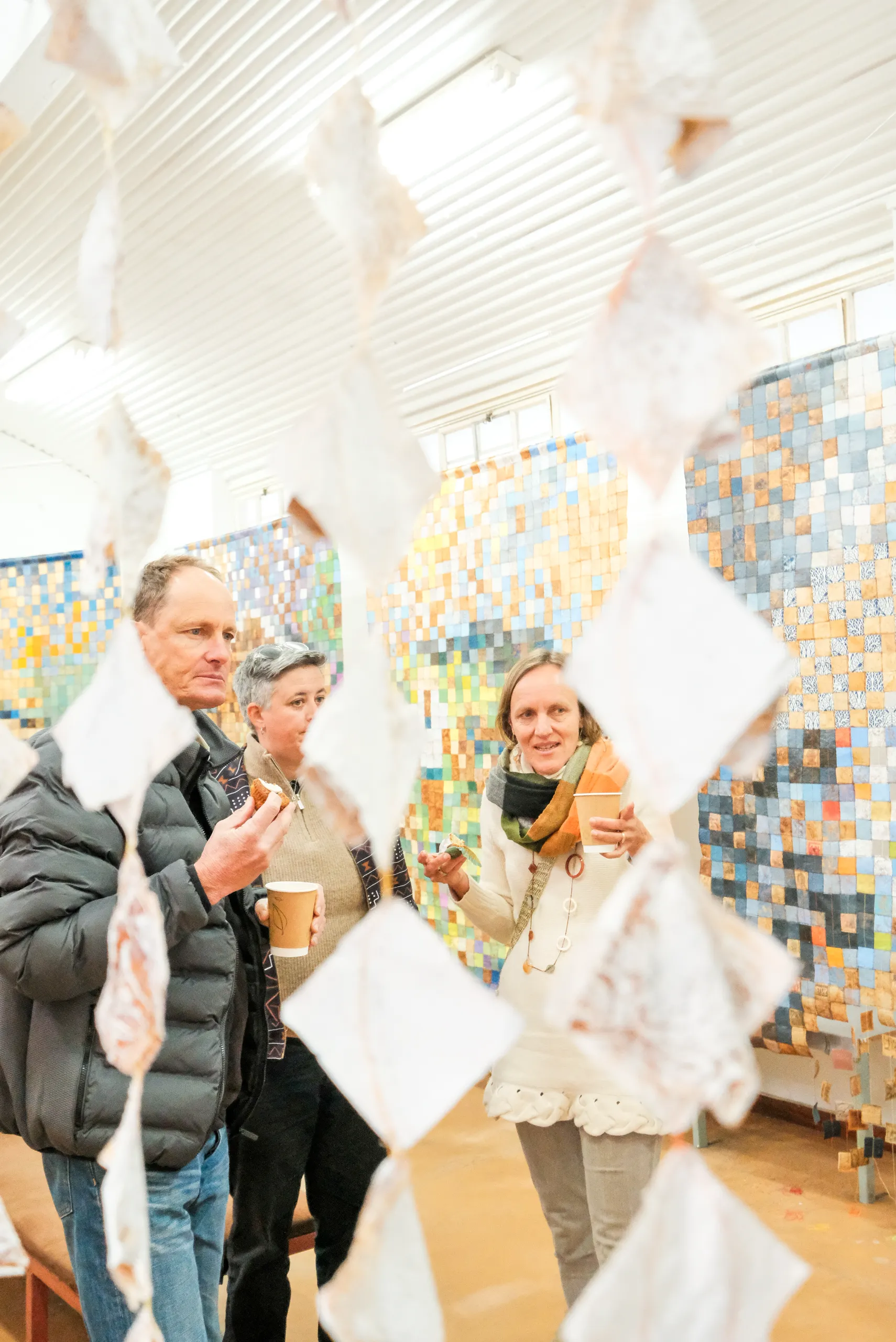
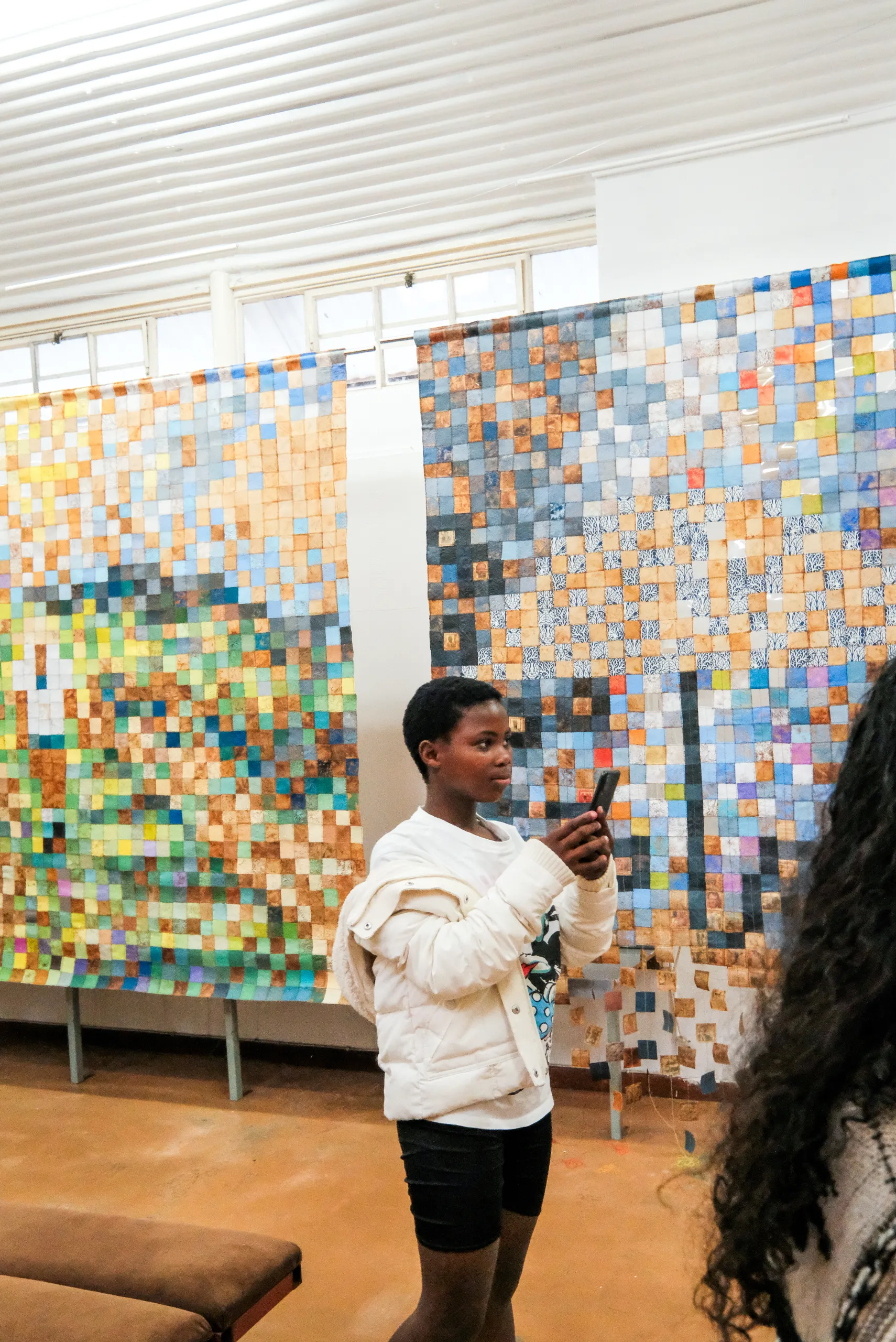
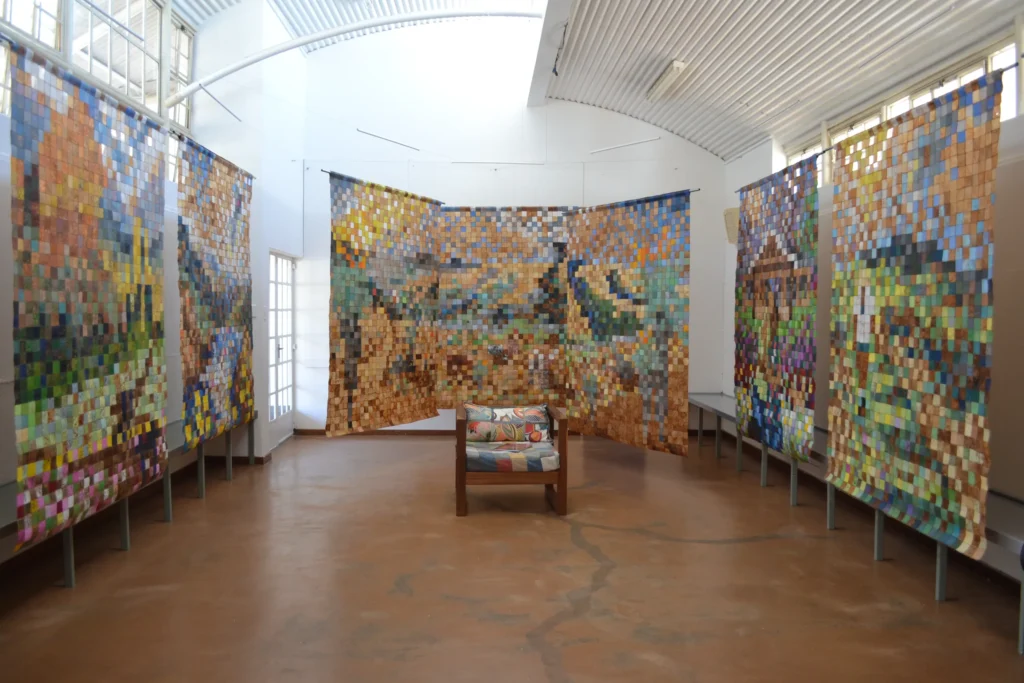
If Holy Trinity was where the twelve quilts found their sacred space, Waterford Kamhlaba was where they came home.
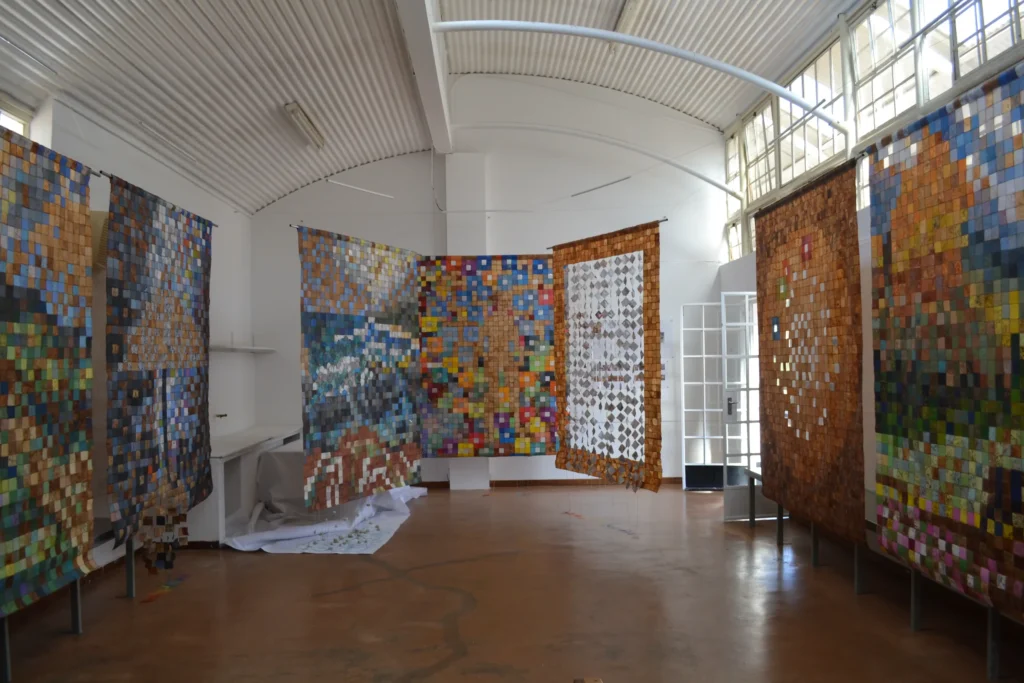
The exhibition at Waterford in 2026 carried a particular weight that no other venue could have given it — because this is where the work began. Not in the studio, and not in the dissertation, but here: in the staffroom, in the corridors, in the art department, and in the strange, suspended years of online teaching when the school was physically closed but never truly stopped.
During those two years of Covid lockdowns, I sat at my desk at home and taught Visual Arts across multiple time zones, a mug of tea always in hand, connecting with students I could no longer stand beside or guide with a gesture across a room. Even trickier was that even common art materials were not guarenteed in the homes of my students. I started coming up with projects that all students, no matter their resources, would be able to do: cereal box shoe scultpures, newspaper collages, coffee drawings.
Teaching online was a time of chain-drinking mug and mug of tea in front of my laptop. The staffroom — those pauses between lessons, the kettle, the conversation that traversed boundaries — had vanished overnight. What remained was the screen, the cup of tea, and the teabag left behind when it was finished.
The teabag looked and looked at me, and since I already had my mind on alternative art materials, I looked right back.
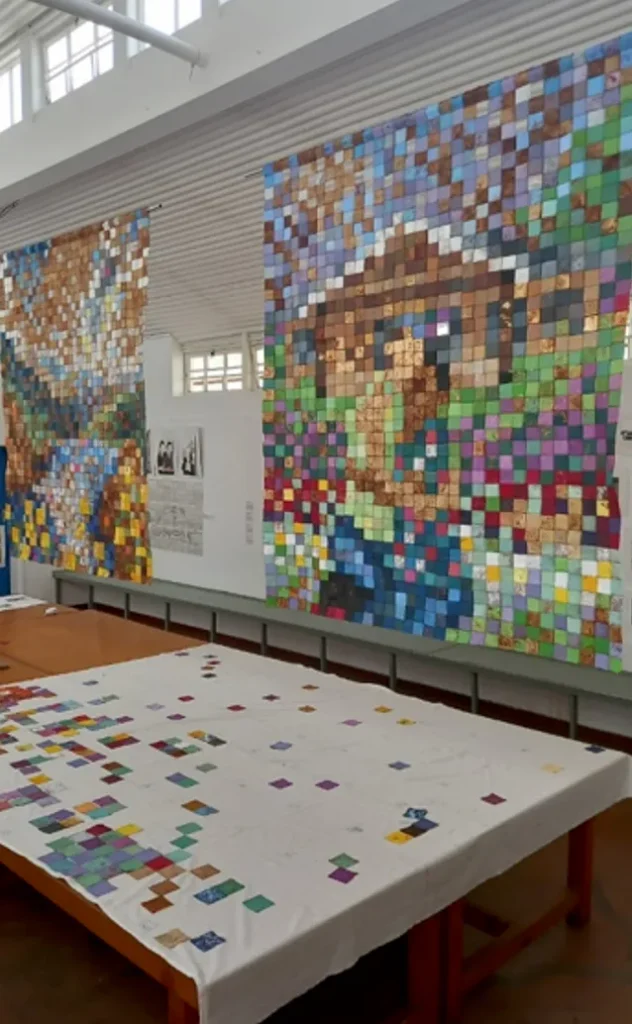
I began saving teabags. When my first little teabag quilt experiment showed promise, I began asking others to save theirs. Once in-person lessons resumed, the staffroom become a collection hotspot (and a relationship-rebuilding hotspot). I also had students bring me their carefully-dried teabags. The Waterford community was key to providing my raw material.
The online years, for all that they took, gave me this: a practice born from absence, from the longing for the warmth of a shared cup in a shared space, from the particular grief of a community that could not gather.
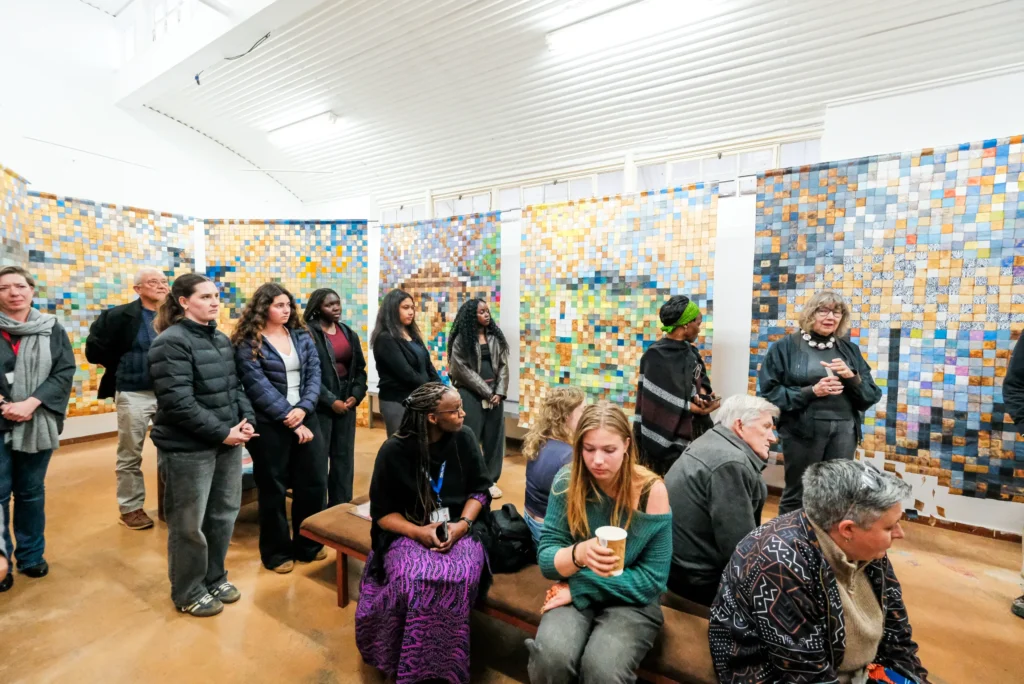
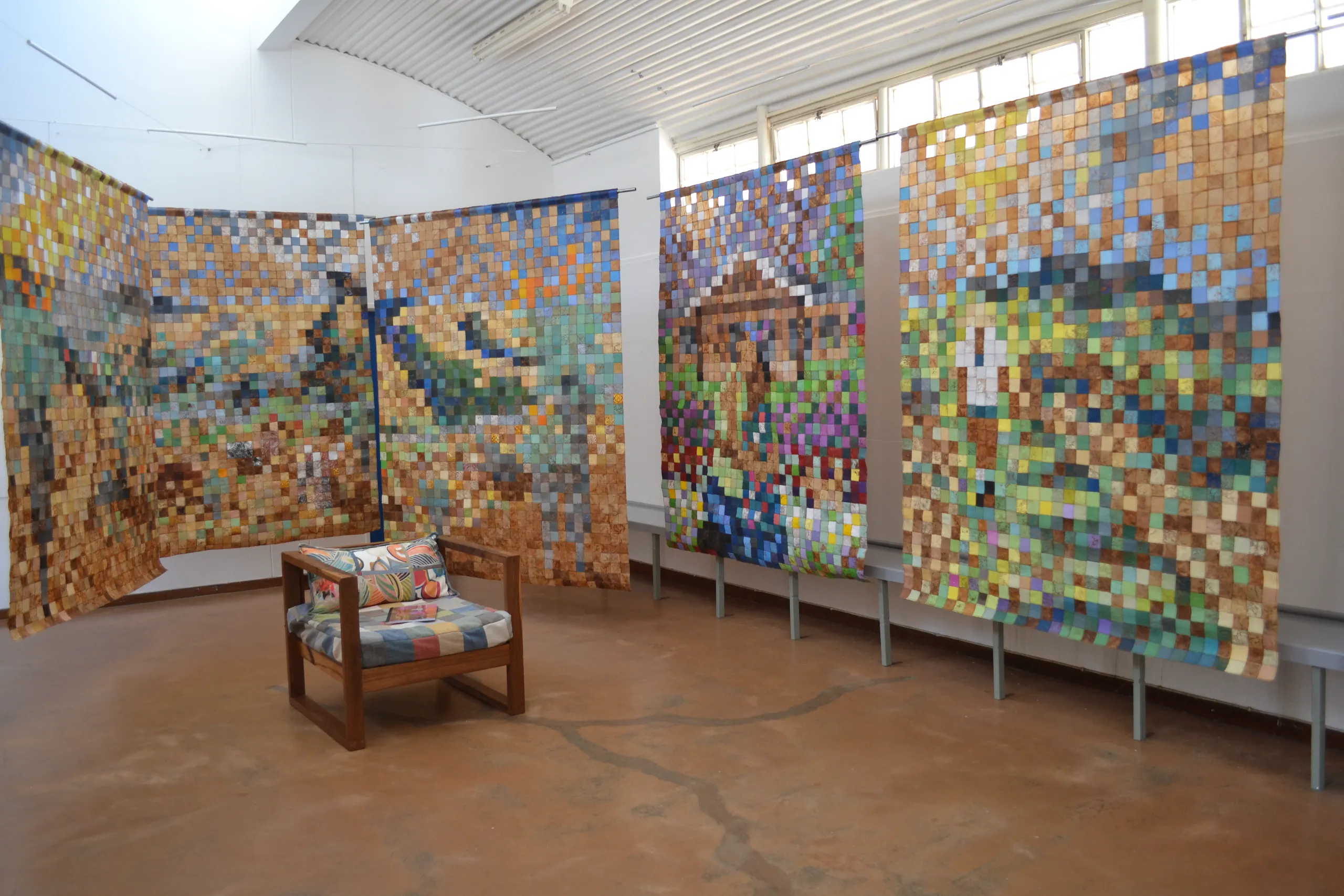
To hang the quilts at Waterford was to return them to the community at their heart. The Waterford community also played a special part in the creation of the January: Bhimbidvwane: Kamhlaba, as members of the school body were invited to place coloured teabags for the quilt.
Waterford Kamhlaba is not an ordinary school. Founded in 1963 in direct defiance of apartheid — the first multiracial school in southern Africa — it has always been a place that believed education could be a force for belonging across every boundary that the world builds between people. It harboured Zindzi and Zenani Mandela while their father was imprisoned. Today it holds students and staff from over sixty nations. Kamhlaba means, in SiSwati, of the world — a name given by King Sobhuza II, and one the school has tried, imperfectly and persistently, to live up to ever since.
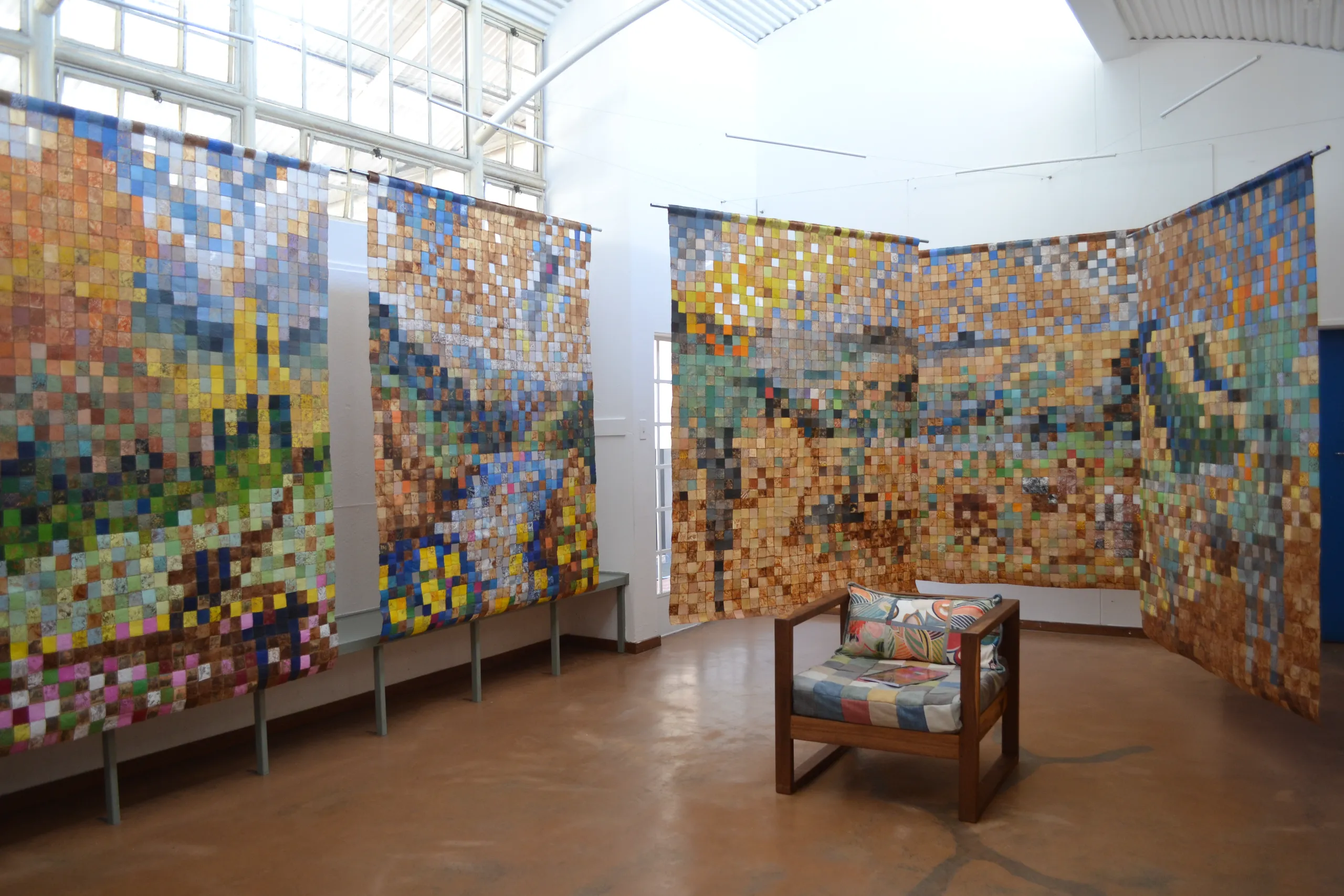
In the aftermath of Covid-19, the Black Lives Matter movement, and Eswatini’s political unrest, relationships at WK were frayed. Over many cups of tea and conversations, colleagues and students began to restitch the tears.
To see the work hanging in one of my art classrooms was to see the community see itself — stitched together across distance and disruption…colourful, fragile, and luminous.